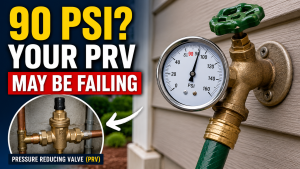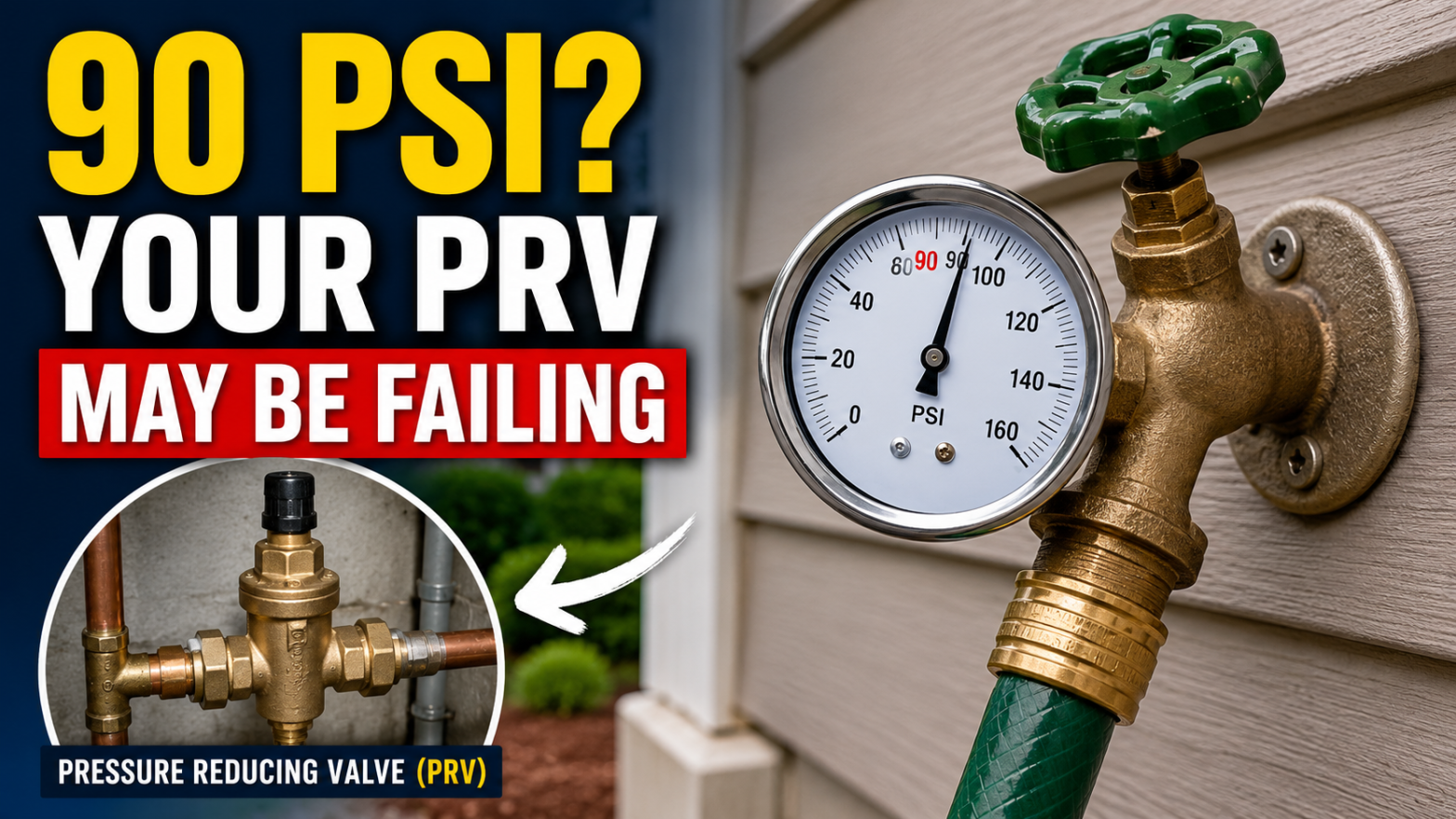
90 PSI Hose Bib? Your PRV May Be Failing
Testing an exterior hose bib is a smart first step.
A simple pressure gauge can show a hidden plumbing problem.
In this case, the gauge showed 90 PSI.
That reading is higher than many homes should run.
High water pressure can stress pipes, valves, faucets, and appliances.
It can also make small leaks worse over time.
Many homes use a pressure-reducing valve, also called a PRV.
A PRV lowers water pressure from the city supply.
It is often found near the main water shutoff.
It may also sit near the water meter.
Some PRVs have a clear adjustment screw or bolt.
Others may look different, based on brand and age.
If the top looks like a rusty nub, use caution.
That nub may be a broken adjustment bolt.
It may also be part of an older valve design.
Without a clear model number, it is hard to confirm.
Do not force the nub with pliers.
A rusted PRV can break during adjustment.
That can leave the home with no water control.
It can also cause a leak near the main supply.
If the valve is old, replacement is often the safer choice.
Replacing only the bolt may not fix the real issue.
The internal spring, seat, or diaphragm may also be worn.
A licensed plumber can test pressure before and after the PRV.
They can also check for thermal expansion problems.
That matters if the home has a closed plumbing system.
You can read more about pressure-reducing valves from Watts.
You can also review general home water pressure tips from Family Handyman.
Question
I tested my exterior hose bibs with a pressure gauge.
The reading was 90 PSI.
I think I have a PRV.
The adjustment bolt looks like a small nub.
Is this a PRV, and should I replace the bolt?
Answer
Yes, it may be a PRV if it is on the main water line. A 90 PSI reading suggests the valve may need adjustment or replacement. If the adjustment bolt is rusted, broken, or unclear, hire a plumber. Replacing the whole PRV is usually safer than forcing an old bolt.
What To Do Next
Take a clear photo of the valve body.
Look for a brand name or model number.
Test the pressure again at another hose bib.
Then test it when no water is running.
If pressure stays near 90 PSI, call a plumber.
Ask them to inspect the PRV and expansion tank.
This can protect the rest of your plumbing system.
I’m Chris Mayer, writing for Plumbing 101.