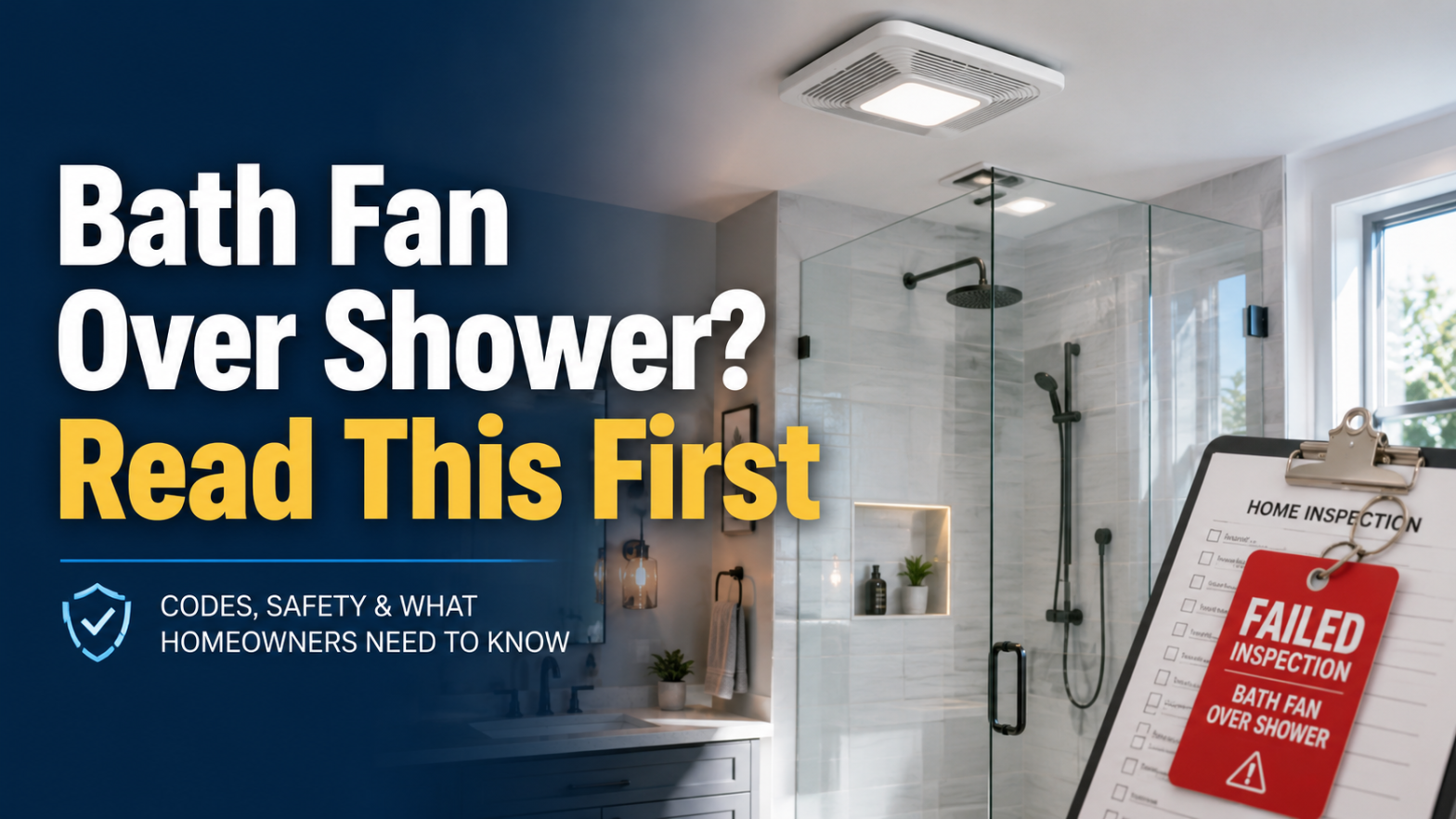
Shower Fan Failed Inspection? Read This First
A bathroom remodel can pass one inspection and still hit a wall later.
That is what happened with this shower fan and light setup.
The bath fan and light were installed above a shower enclosure.
The job passed rough inspection.
It also passed the final plumbing inspection.
The final building inspection came around.
That is when the problem showed up.
The inspector said the fan/light had to move.
The other choice was a wet-location approved unit.
That can feel confusing after earlier inspections pass.
Still, bathroom work often crosses several trade lines.
Plumbing, ventilation, electrical, and building rules can overlap.
A shower has water, steam, and a tight working space.
That makes product labels very important.
Question
Can a bath fan/light stay above a shower if it is GFCI protected?
Answer
Yes, but only if the unit is listed and marked for that shower location.
GFCI protection alone may not fix the issue.
The fan/light must match its listing, label, and installation manual.
The local inspector also has final authority on the job.
Why the Inspector May Have Said No
A GFCI breaker helps reduce the risk of electric shock.
But it does not change the product listing.
The fan still needs approval for that wet area.
Many fan/light manuals use careful wording.
They may say the unit is suitable over a tub or shower.
Then they add a condition.
That condition is often GFCI protection.
Broan-NuTone shows this type of wording in some fan instructions.
You can review one example from the Broan-NuTone installation instructions.
The key point is simple.
The label and manual matter as much as the breaker.
Wet Location vs. GFCI Protection
A wet-location rating deals with water exposure.
GFCI protection addresses the risk of electrical shock.
These are not the same thing.
A product may need to pass inspection.
For shower-area lighting rules, review NFPA 70, the National Electrical Code.
You can also read this plain-language overview of NEC 410.10(D) bathtub and shower areas.
What I Would Do Next
First, find the exact model number.
Then print the installation manual.
Highlight the tub or shower approval language.
Also, highlight the GFCI requirement.
Next, check the label inside the fan housing.
The inspector may want that exact marking.
Ask if a listed replacement unit would satisfy the correction.
Keep the tone calm and direct.
Most inspectors want a safe and clear fix.
If the unit lacks the correct marking, replace it.
If the paperwork is unclear, moving it may be easier.
For a bathroom, ventilation is still important.
A good fan helps remove damp air after showers.
That protects paint, drywall, framing, and nearby plumbing areas.
Just make sure the fan vents outside.
Never vent bathroom air into an attic.
That can create mold and moisture damage.
Bottom Line
This is not really a plumbing fight.
It is a bathroom safety and code issue.
The best answer is a listed fan/light.
It should be approved for the exact shower location.
It should also follow the manual.
When needed, it should be GFCI-protected.
That gives you the cleanest path to approval.
I’m Chris Mayer, writing for Plumbing 101.