Question
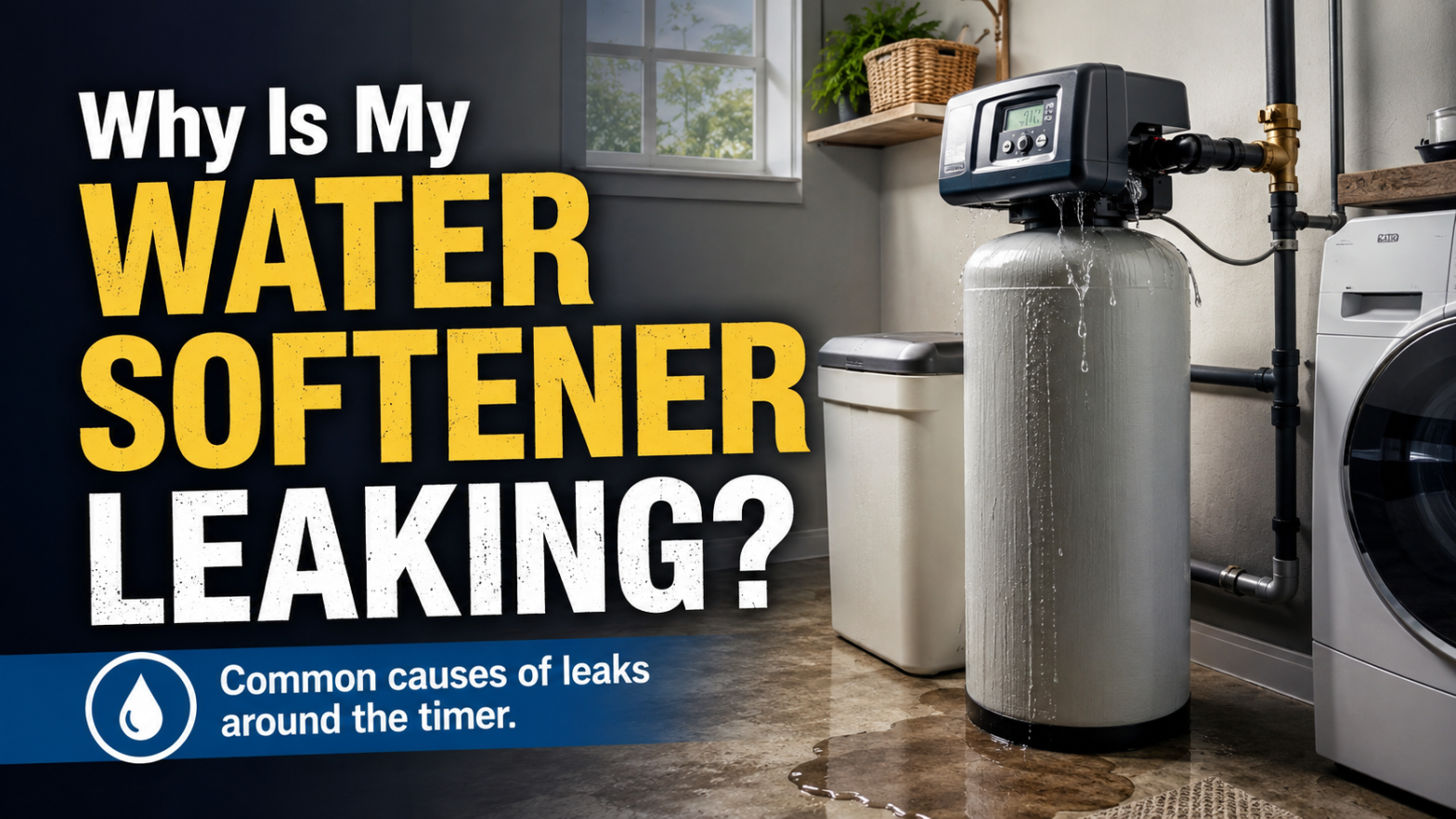
There is water all over the floor around my water softener.
I do not know if it is the only source.
But I see water leaking from my timer.
What would cause that?
Answer
A water softener timer should not leak water. If water is coming from that area, the leak is usually inside the control valve, around a seal, piston, or spacer, or in the valve body.
The timer itself is usually an electric or mechanical part.
It turns the softener on through each cycle.
Water should stay inside the valve body.
When water reaches the timer area, something has failed inside the head.
Common Causes
1. Bad Seals or Spacers
Many softeners use seals and spacers inside the control valve.
These parts can wear out over time.
When they fail, water can leak into the timer housing.
2. Cracked Control Valve Body
A cracked valve body can also cause a leak.
This may happen from age, freezing, or pressure stress.
If the body is cracked, replacement is often needed.
3. Loose Screws or Cover Parts
Some leaks come from loose valve head screws.
Do not overtighten them.
Plastic parts can crack if too much force is used.
4. High Water Pressure
High pressure can make weak seals leak faster.
The EPA explains how leaks waste water in homes.
You can learn more from the EPA WaterSense leak guide.
5. Drain Line or Bypass Leak
The timer may not be the only source.
Check the bypass valve, drain line, and inlet fittings.
Water can run down the unit and look misleading.
What Should You Do First?
First, put the softener in bypass mode.
Then unplug the unit if water is near the wiring.
Dry the area and watch where the water starts again.
If water comes from behind the timer, call a plumber.
You may need a seal kit, piston kit, or new control head.
The Water Quality Association also has helpful water treatment information.
Final Tip
Do not ignore this leak.
Water near a timer can damage the controls.
It can also damage floors, walls, and nearby items.
A fast repair can save money later.
I’m Chris Mayer, writing for Plumbing 101.