A glass shower door can look clean and modern.
But one small screw hole can cause big trouble.
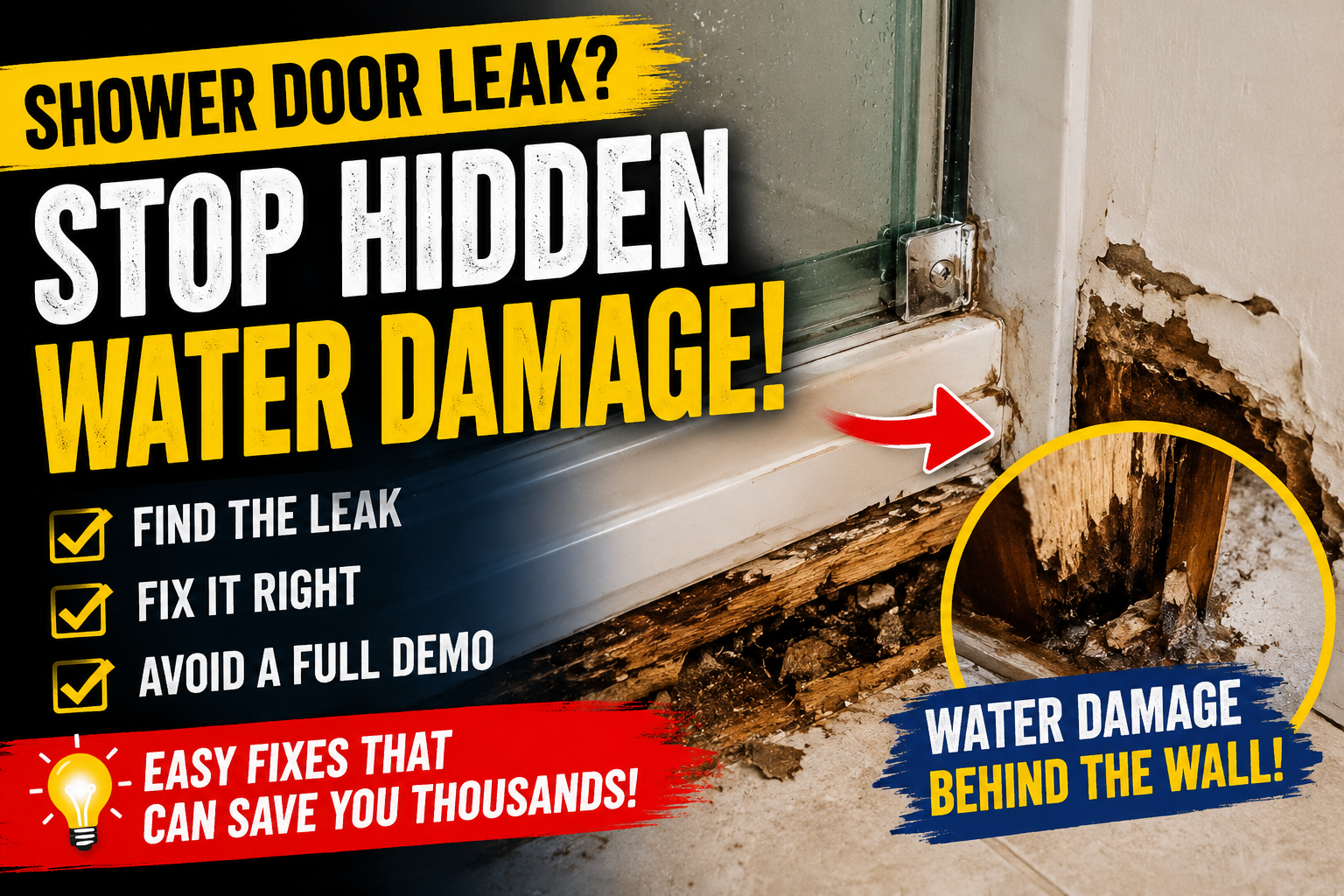
After a new shower door installation, paint may start lifting.
The trim or kickboard near the shower may also feel wet.
This often means water is getting behind the wall surface.
Question
We had a glass shower door installed.
A few months later, the paint started lifting from the wall.
After removing the paint and the kickboard, we found water soaking into it.
The water seems to come from the lower screw hole.
Can this be fixed without a full shower demo?
Answer
Yes, you may fix this without a full shower demo.
But the screw hole must be dried, cleaned, and sealed the right way first.
Forcing silicone into a wet screw hole often fails.
Silicone does not bond well to wet, dirty, or loose material.
It can trap water inside the wall.
That may cause more paint damage later.
What To Check First
Start by drying the area fully.
Use fans and leave the trim open.
Do not close the wall while damp wood remains.
Check for soft drywall, swollen trim, or mold spots.
Next, inspect the shower door frame.
Look at the lower screw hole closely.
The installer may have drilled through tile, wallboard, or trim.
If the hole was not sealed before the screw went in, water can follow the threads.
How To Fix The Leak
- Remove the lower screw if possible.
- Let the hole dry completely.
- Clean out old silicone and loose material.
- Fill the hole with a quality bathroom sealant.
- Coat the screw threads before reinstalling.
- Seal the screw head after it is tight.
- Caulk only the correct shower door seams.
Use a sealant made for wet bathroom areas.
A mold-resistant silicone is often best near showers.
You can read more about mold cleanup from the EPA mold guide.
Also, check caulking rules for your shower door model.
Some tracks need open weep paths.
Blocking those paths can push water into the wall.
Manufacturer directions are very important here.
When A Bigger Repair Is Needed
A full shower demo is not always needed.
But wet drywall or rotten wood must be removed.
If the wall stays wet after showers, stop using that shower.
Then call a shower door installer or plumber.
For more bathroom repair guidance, visit Family Handyman’s shower caulking guide.
I’m Chris Mayer, writing for Plumbing 101.