A bathroom sink leak can be confusing.
It gets worse when the drain looks correct.
This problem often happens after installing a pop-up drain.
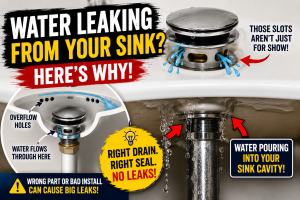
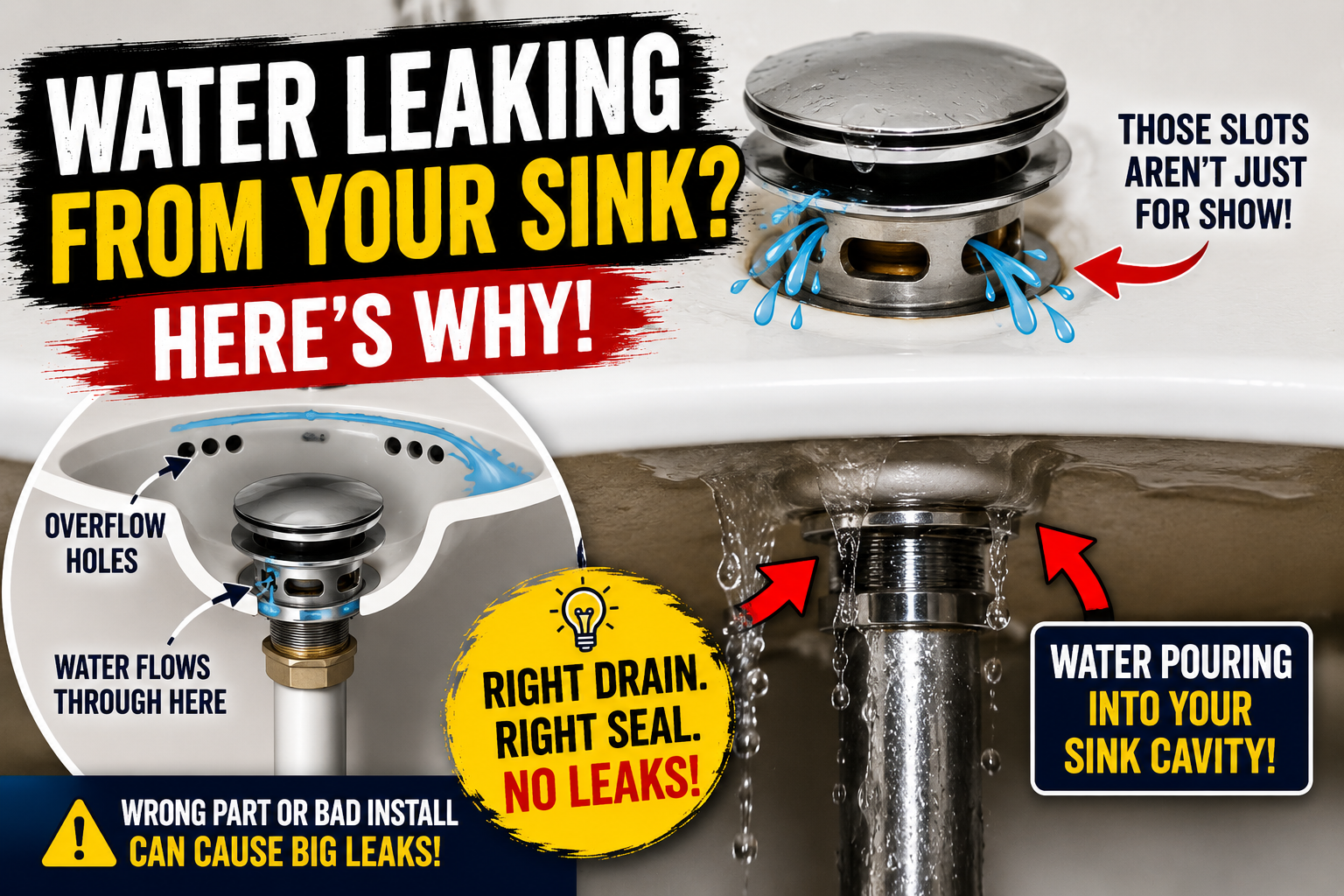
The drain has two slots near the top.
Those slots are usually for a sink overflow.
A sink overflow gives extra water a path out.
It helps prevent the bowl from spilling over.
The overflow holes inside the sink feed a hidden channel.
That channel should drain into the pop-up drain body.
That is why some drain bodies have side slots.
But water should not pour outside the sink.
If it does, something is wrong.
What May Be Happening
When lots of water runs down the drain, pressure can build.
That water may push into the overflow passage.
If the sink or drain is not sealed properly, water escapes.
It may leak from the back or bottom of the sink.
This can look like a bad drain stopper.
Sometimes it is the wrong drain assembly.
Sometimes the drain is right, but installed incorrectly.
A sink with overflow holes needs an overflow-style drain.
A sink without overflow holes needs a non-overflow drain.
Mixing those parts can cause leaks.
You can see common drain styles at The Home Depot bathroom sink drain section.
Question And Answer
Question: Did I buy the wrong pop-up drain stopper?
Answer: Maybe, but first check the drain seal and sink overflow design. Since your sink has real overflow holes, you usually need a drain with overflow slots. If water pours outside the sink, the overflow channel may not be sealed, the gasket may be wrong, or the drain may not match the sink.
Check The Drain Gaskets
The top flange must seal inside the sink bowl.
Plumber’s putty or silicone is often used there.
Always follow the drain maker’s instructions.
The rubber gasket below the sink matters too.
It must sit flat against the sink bottom.
Do not place putty under that lower rubber gasket.
That area needs a clean rubber seal.
If the gasket is crooked, water can escape.
If it is too small, water can escape.
If the nut is loose, water can escape.
Check For Slow Drainage
A slow drain can push water into the overflow path.
That can expose a weak seal fast.
Run water and watch the drain speed.
If water pools in the bowl, check the trap.
Also, check the pop-up rod opening.
Hair and soap can collect there.
The EPA Fix a Leak Week page explains why small leaks matter.
Best Fix
Remove the pop-up drain and inspect everything.
Confirm the sink has a real overflow passage.
Confirm the drain is made for overflow sinks.
Replace any poor-fitting gasket.
Clean the sink surface before reinstalling.
Then test with a full flow of water.
Also, fill the bowl and release it fast.
That test will show hidden leaks.
If water still exits the sink body, replace the drain.
If that fails, the sink may have a defect.
I’m Chris Mayer, writing for Plumbing 101.