A renovation is the best time to fix old plumbing.
Open walls make pipe work easier.
They also let you improve the layout before the drywall returns.
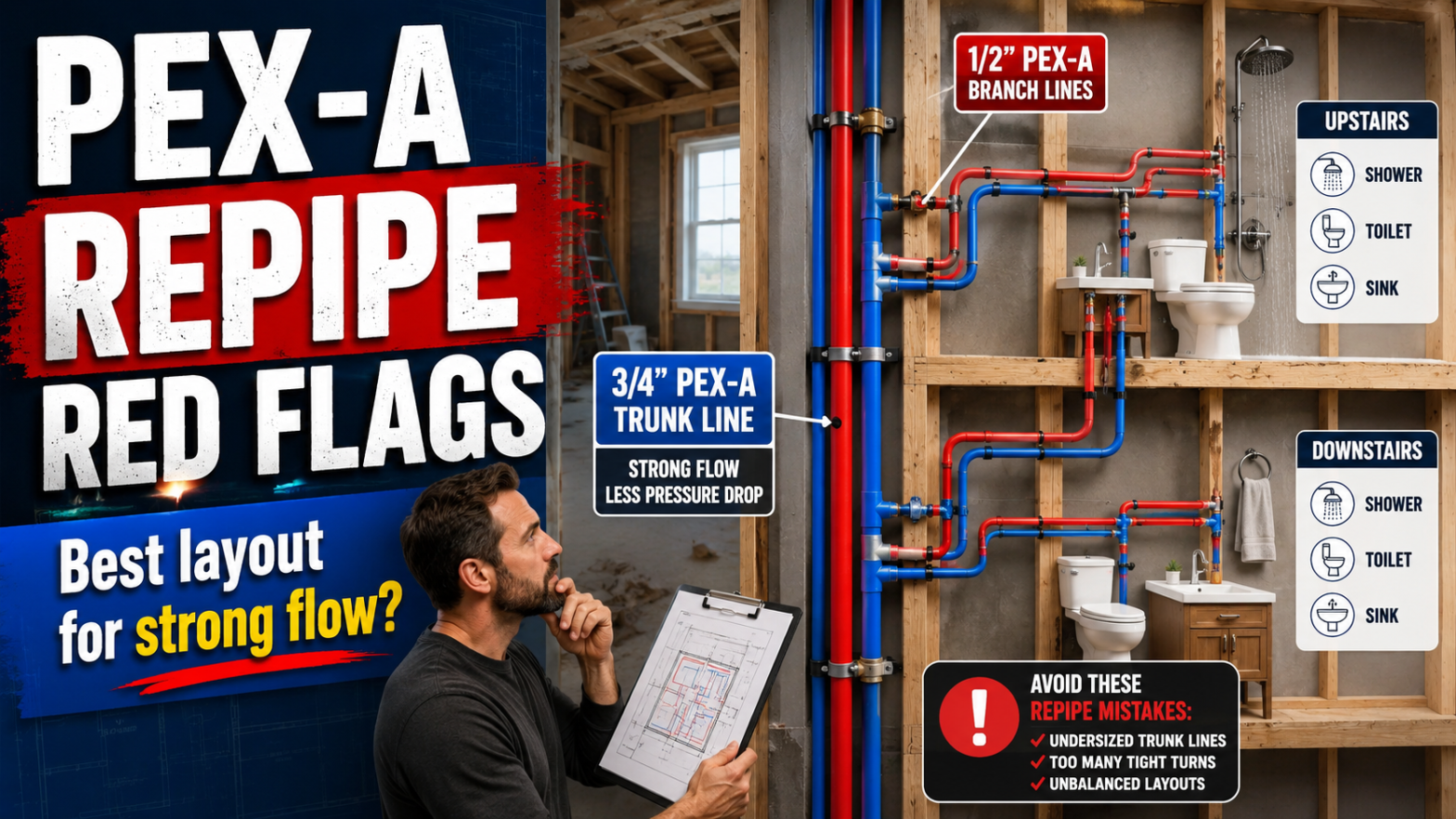
This homeowner is replacing old copper with PEX-A.
The plan uses 3/4 inch lines as the main trunk.
It also uses 1/2 inch branches for smaller fixture runs.
The upstairs shower and toilet sit above the lower bathroom.
That can make the layout cleaner.
It can also raise questions about flow and pressure.
PEX-A is popular because it is flexible.
It can make long runs with fewer fittings.
Fewer fittings may mean fewer leak points.
Products from brands like Uponor are often used in home and commercial plumbing.
Push-to-connect and PEX parts are also common today.
Companies like SharkBite make fittings, adapters, and PEX plumbing parts.
Always use parts approved for your pipe type.
Question
Are there red flags in this PEX-A layout?
Should separate branches feed the upstairs fixtures?
Answer
Yes, there are a few things to check.
Separate branches from the trunk are usually better for upstairs fixtures.
This is especially true for showers.
A 3/4 inch trunk is a good start.
It can feed several fixtures better than a small line.
But long, shared 1/2-inch branches can cause pressure drops.
Showers are more sensitive than toilets.
A toilet only needs water for short fills.
A shower needs a steady flow while someone is using it.
If the upstairs shower shares a small branch, the flow may suffer.
The problem may show when another fixture runs.
You may notice a weaker shower stream.
I would run a 3/4 inch trunk near both bathrooms.
Then I would branch off with short 1/2 inch lines.
Give each shower its own 1/2 inch branch.
Do the same for each toilet and sink group.
Keep the hot water layout in mind, too.
Long hot runs waste water.
They also make people wait longer for hot water.
Short, direct hot lines are better.
Avoid too many elbows and tight bends.
Support the PEX as required by code.
Protect the pipe where it passes through the framing.
Use nail plates where screws may hit the pipe.
Check your local plumbing code before closing walls.
You can also review plumbing code resources from the International Code Council.
The clean-slate upgrade is smart.
Use it to make short, simple, and well-sized runs.
That will give better flow and easier service later.
I’m Chris Mayer, writing for Plumbing 101.