Why Is My Sewage Pump Running After Rain?
A finished basement can add comfort and value to a home.
But it also adds plumbing parts that need care.
One common part is a sewage ejector pump.
This pump moves wastewater from the basement fixtures up to the main sewer line.
It should only run when water enters the basin.
So, it can be worrying when it runs during dry plumbing use.
This is often noticed after heavy rain.
The pump may start every 30 minutes.
No toilet, sink, shower, or washer may be used downstairs.
That usually means water is entering the basin from another source.
In many homes, the source may be groundwater.
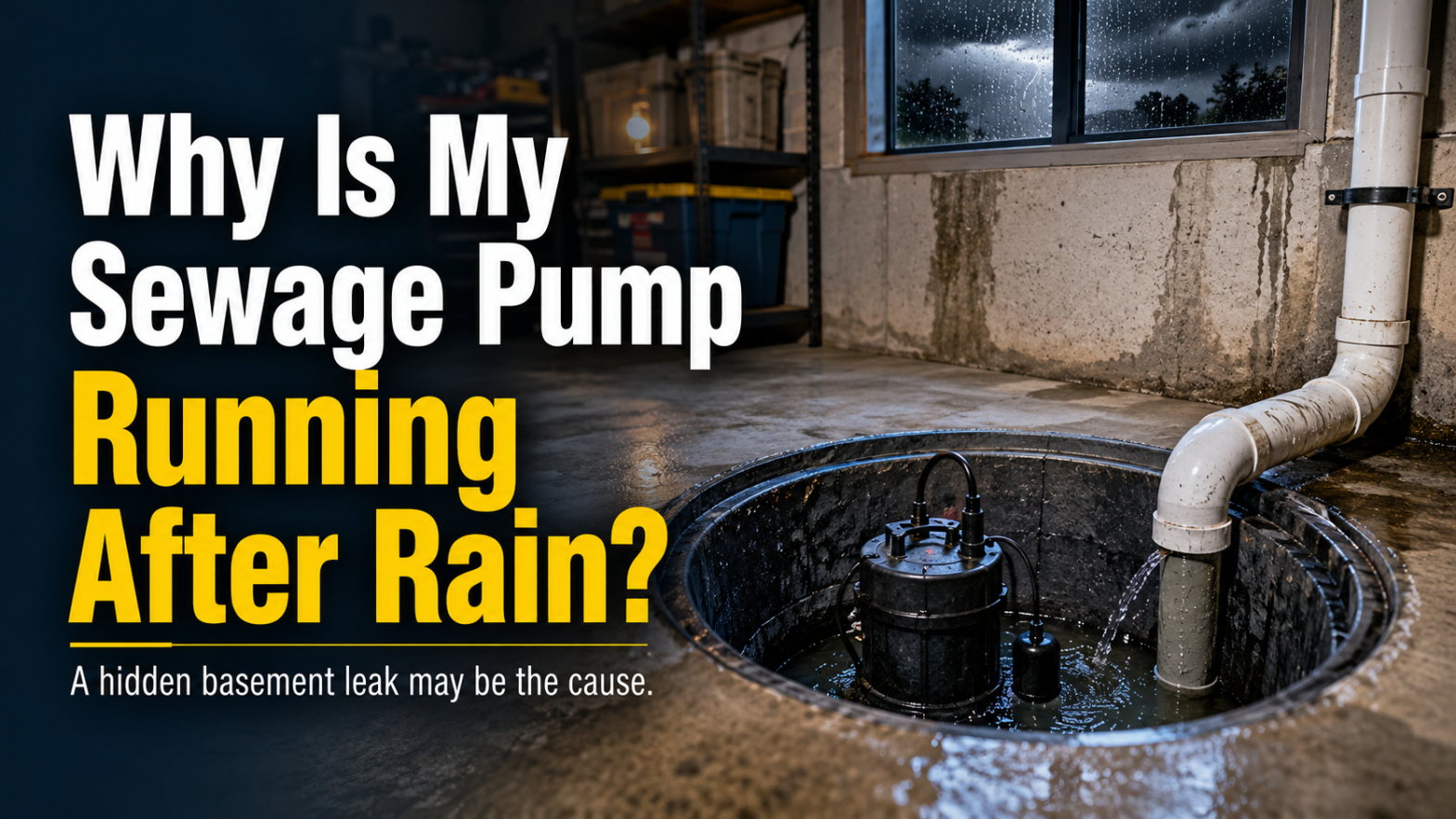
The leak may happen around the inlet pipe.
This is the pipe that enters the sewage basin from the side.
Most ejector basins use a rubber or plastic seal at that opening.
That seal may be called a grommet.
If it moves, cracks, or pulls away, water can enter the pit.
Groundwater pressure after storms can make this worse.
Patch products may slow the leak.
But they may not bond well under standing water.
They also may fail along the bottom of the pipe.
That area is often the hardest place to seal.
Question
Should a leaking sewage ejector pit be used like another sump pump?
Answer
No. A sewage ejector pit should not be treated like a sump pump. The basin should stay sealed. Groundwater should be kept outside the pit.
A sewage basin is made for wastewater.
It is not made to collect stormwater.
Using it that way can create several risks.
The pump may wear out faster.
The pit may overflow during a power outage.
It may also allow sewer gases to escape.
A proper repair starts with finding the water path.
The seal around the inlet pipe may need replacement.
The basin wall may also be cracked or distorted.
In some cases, the whole basin must be replaced.
That is often the best long-term fix.
An outside repair may also be needed.
This may involve opening concrete near the pit.
The goal is to stop water before it reaches the basin.
A plumber may use hydraulic cement or an approved sealant.
Wet-area repairs need the right product and surface prep.
A foundation expert may also be needed.
This is important if water pressure is moving soil or concrete.
Do not break concrete near footings without expert advice.
That can create new drainage or structure problems.
Also, check whether your home needs better drainage.
Clean gutters and longer downspouts may help.
Grading soil away from the house may also help.
A separate sump system may be needed for groundwater.
That system should not connect to the sewage basin.
You can read more about flood risk at FEMA.
You can also review wastewater basics from the EPA.
The safest next step is a camera and pit inspection.
Ask the plumber to inspect the basin, inlet seal, and pipe slope.
Then ask for a written repair plan.
That plan should explain the inside and outside repair options.
It should also explain the power outage risk.
A battery backup may help in the short term.
But it is not a full repair.
The real fix is stopping groundwater from entering the sewage pit.
That protects the pump, basement, and sewer system.
I’m Chris Mayer, writing for Plumbing 101.