Basement Bathroom Drain Slope Issues
Basement remodels can be stressful, especially when the budget forces you to do the plumbing yourself. A common challenge is working with drains and vents under a concrete slab. Today we’ll answer some key questions to help guide your project.
Q: How do I know if my drain slope is enough under a slab?
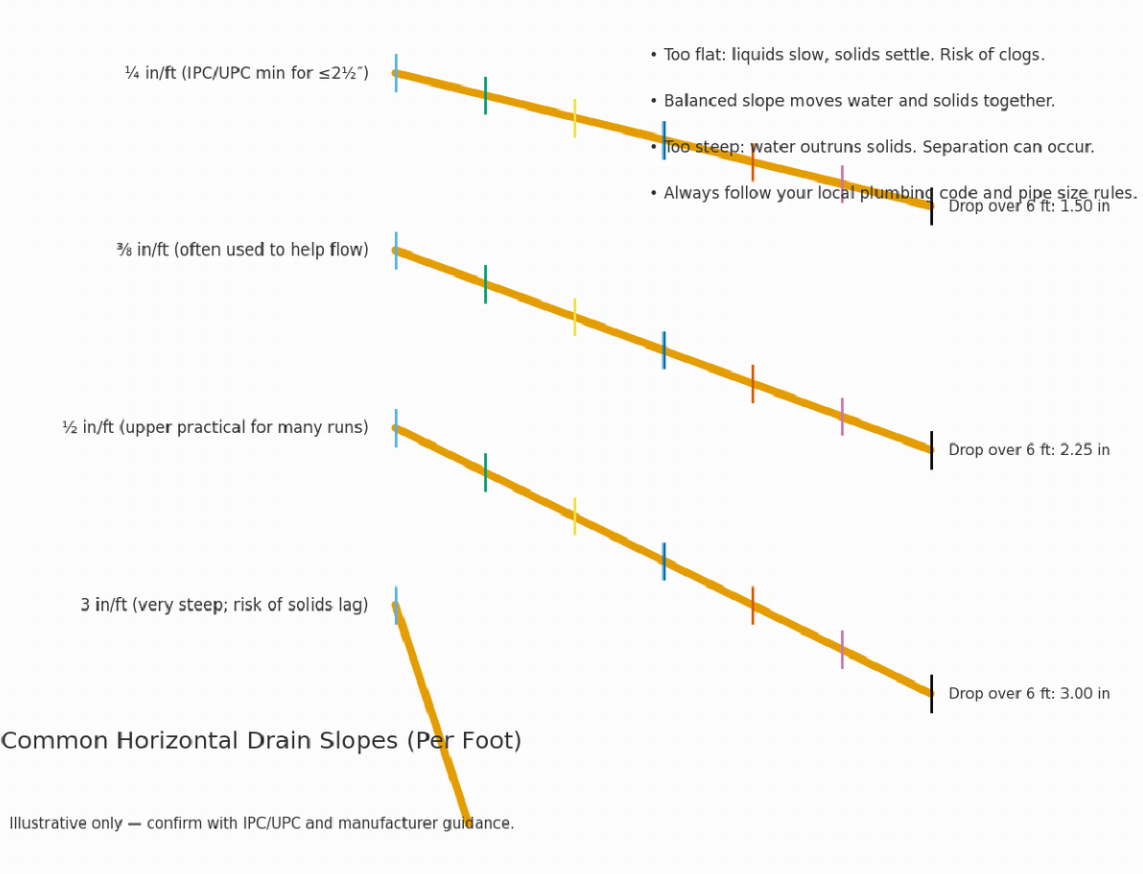
A: The Uniform Plumbing Code requires a minimum slope of 1/4 inch per foot for 2-inch drains. For 3-inch drains, 1/8 inch per foot is allowed. Always measure carefully before cutting concrete. If depth is limited, consider rerouting or using low-profile fittings.
Q: Where should I put a cleanout?
A: Place an accessible cleanout at the end of the main line. Near the toilet is common, but be sure it remains accessible once walls or flooring are installed.
Q: Can I connect PVC to a galvanized vent with a Fernco?
A: Yes, but only use a banded Fernco (shielded coupling) above ground. Unshielded couplings are not allowed inside buildings under UPC codes.
Q: Is a horizontal wet vent legal?
A: Under the UPC, horizontal wet venting is limited. A safer choice is to install individual dry vents for fixtures. This adds work but avoids inspection issues later.
Extra Tips for Your Basement Bathroom
- Check your city’s plumbing code since rules vary. Seattle Plumbing Code.
- Always use 2-inch vents for fixtures. This helps prevent slow draining or sewer gas problems.
- Plan before cutting concrete. It saves time and prevents costly mistakes.
Doing your own plumbing under a slab can be tough, but with proper planning, slope checks, and correct venting, it’s possible to succeed. If you are unsure, consider calling a licensed plumber for advice before you start cutting.
I’m Chris Mayer, plumbing for Plumbing 101.