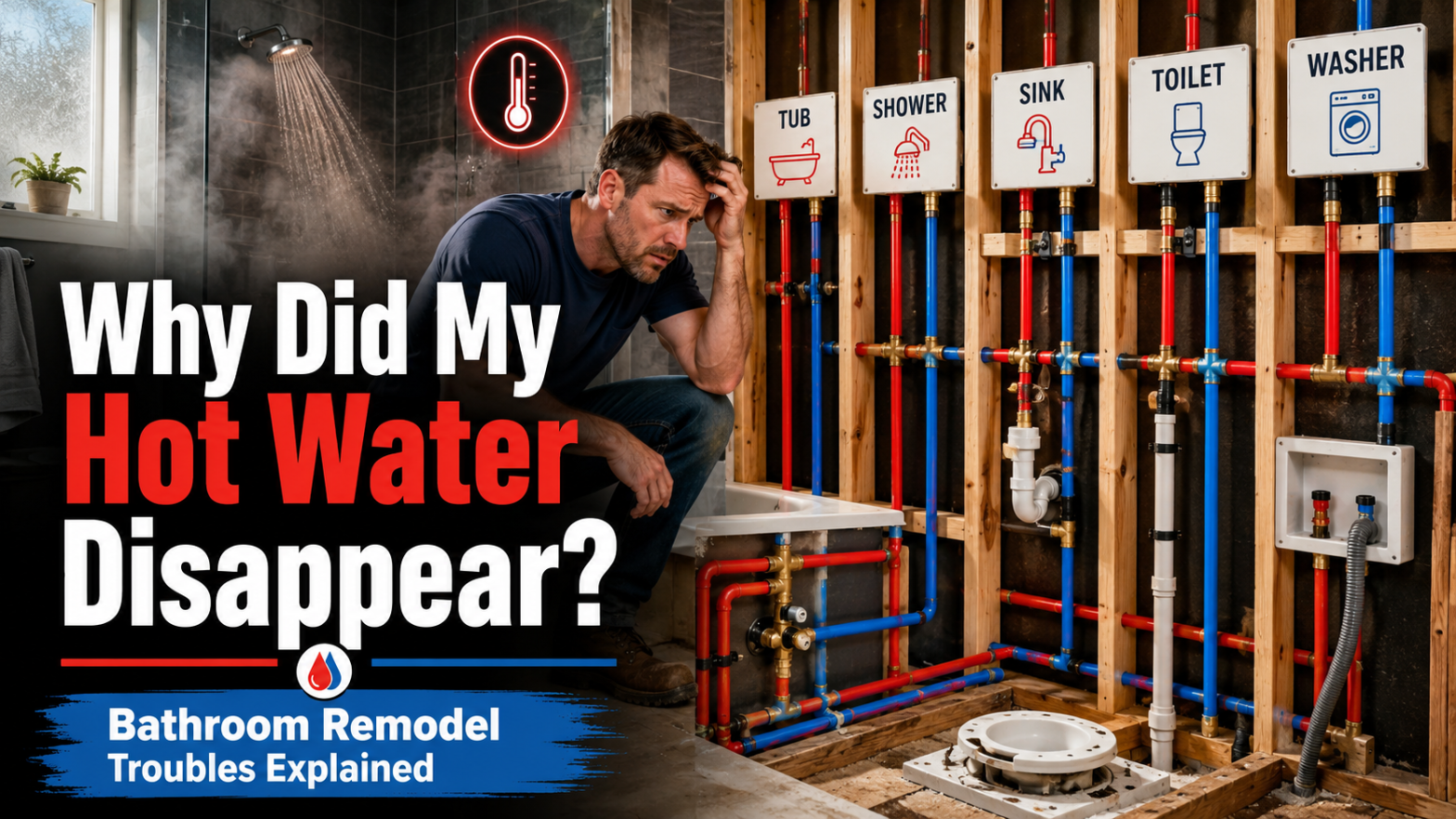
No Hot Water After Bathroom Remodel?
A bathroom remodel can uncover plumbing issues fast.
One common problem is losing hot water after the water is turned back on.
This can be confusing when no leaks appear.
You may get warm water for a short time.
Then the shower and house fixtures stop getting hot water.
After about an hour, the water may heat again.
This usually means cold water is mixing into the hot side.
Question
I am remodeling a bathroom with two sets of water lines feeding it.
The room will have a tub, shower, sink, toilet, and washing machine.
I turned the water on to check for leaks.
There is currently no hot water in the existing shower.
The rest of the house also has almost no hot water.
It is barely warm at first.
After about an hour, it heats back up.
Why does this happen?
Answer
This most likely happens because hot and cold water are crossing somewhere in the remodel plumbing.
Cold water is being pushed into the hot water line.
That makes the whole house feel like it has no hot water.
A cross connection can happen during rough-in work.
It may happen with a new shower valve.
It may also happen at a tub valve.
A washing machine valve can cause it, too.
This is more likely when hoses are connected.
It can also happen when a mixer valve is open.
The cold side has pressure.
That pressure can push into the hot side.
Then, cold water travels through the hot piping.
Your water heater may still be working fine.
The hot water is just getting mixed down.
That is why the water feels only warm.
What To Check First
Start by shutting off the new bathroom lines.
Then test the hot water at another fixture.
If hot water returns, the problem is in the remodel area.
Next, check every new valve and connection.
Make sure hot connects to hot.
Make sure cold connects to cold.
Look closely at the shower valve body.
Some valves need a cartridge installed.
Without it, water can cross inside the valve.
Also, check the washing machine box.
Close both washer valves during testing.
Remove any temporary hose between the hot and cold.
That hose can create a direct crossover.
Why It Heats Up Later
The heater may recover after the water stops moving.
Once the crossover flow slows, hot water can build again.
Then the problem returns when fixtures are used.
This pattern points to mixing, not a bad heater.
Helpful Remodel Tips
Test each fixture one at a time.
Label every hot and cold line.
Install shutoff valves where allowed by code.
Do not close walls until the hot water works.
For water-saving fixtures, review the EPA WaterSense program.
For water heater basics, visit Energy.gov water heating.
If the crossover is hard to find, call a licensed plumber.
A plumber can pressure test the lines.
They can also check the shower valve cartridge.
This is important before tile or drywall goes up.
Fixing it now is much easier.
Fixing it later can cost much more.