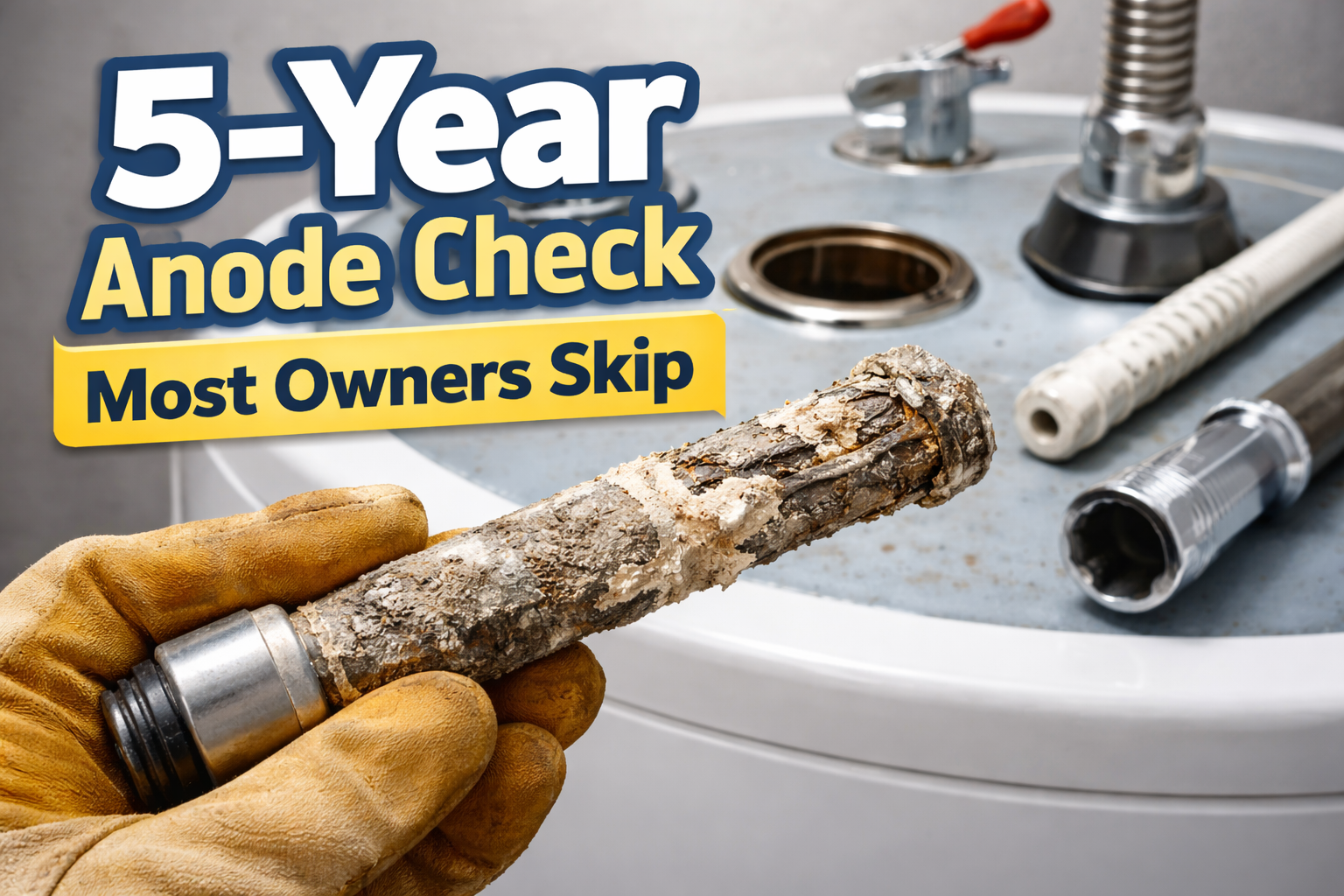
The 5-Year Anode Check Most Owners Skip
You flushed your water heater at year one. You flushed it again at year four. You saw no rust or grit. That is a good sign. But it does not tell the whole story.
A tank can look clean inside and still be corroding. The anode rod is the main reason. It is a “sacrificial” part. It slowly dissolves to protect the steel tank.
Why are the results of a flush results can be misleading
Flushing removes loose sediment from the bottom. The anode wears out on its own. It can be gone while the flushed water looks clear. That is why an inspection matters.
So, should you replace the anode?
If your heater is around five years old, you should inspect it now. Replace it if it is more than half used up. Replace it if the core wire is showing in long spots.
- Replace if 6 inches of core wire is exposed.
- Replace if the rod is very thin in many places.
- Replace if it is cracked, pitted, or falling apart.
What type of anode should you use?
Most homes do well with magnesium. It protects the best in many cases. If you get a rotten egg smell, try aluminum/zinc. That can help reduce odor.
Quick inspection steps
- Turn off the power or gas first.
- Close the cold inlet valve.
- Open a hot faucet to release pressure.
- Use a 1-1/16″ socket and a breaker bar.
- Lift the rod out and check its thickness.
Low clearance above the tank is common. A flexible anode can solve that problem.
Question and answer
Q: I see no grit when I flush. Should I still replace the anode?
A: Yes. Clear, flush water does not show anode wear. Inspect the rod at year five and replace it if it is more than half gone.
Helpful external resources
Tip: If your anode is still thick and solid, reinstall it. Check again in two to three years.
I’m Chris Mayer, writing for Plumbing 101.