Pocket Door vs Shower Plumbing: Best Fix?
A tub and shower remodel can look simple at first.
Then the pocket door plan changes everything.
A pocket door needs a clear wall pocket.
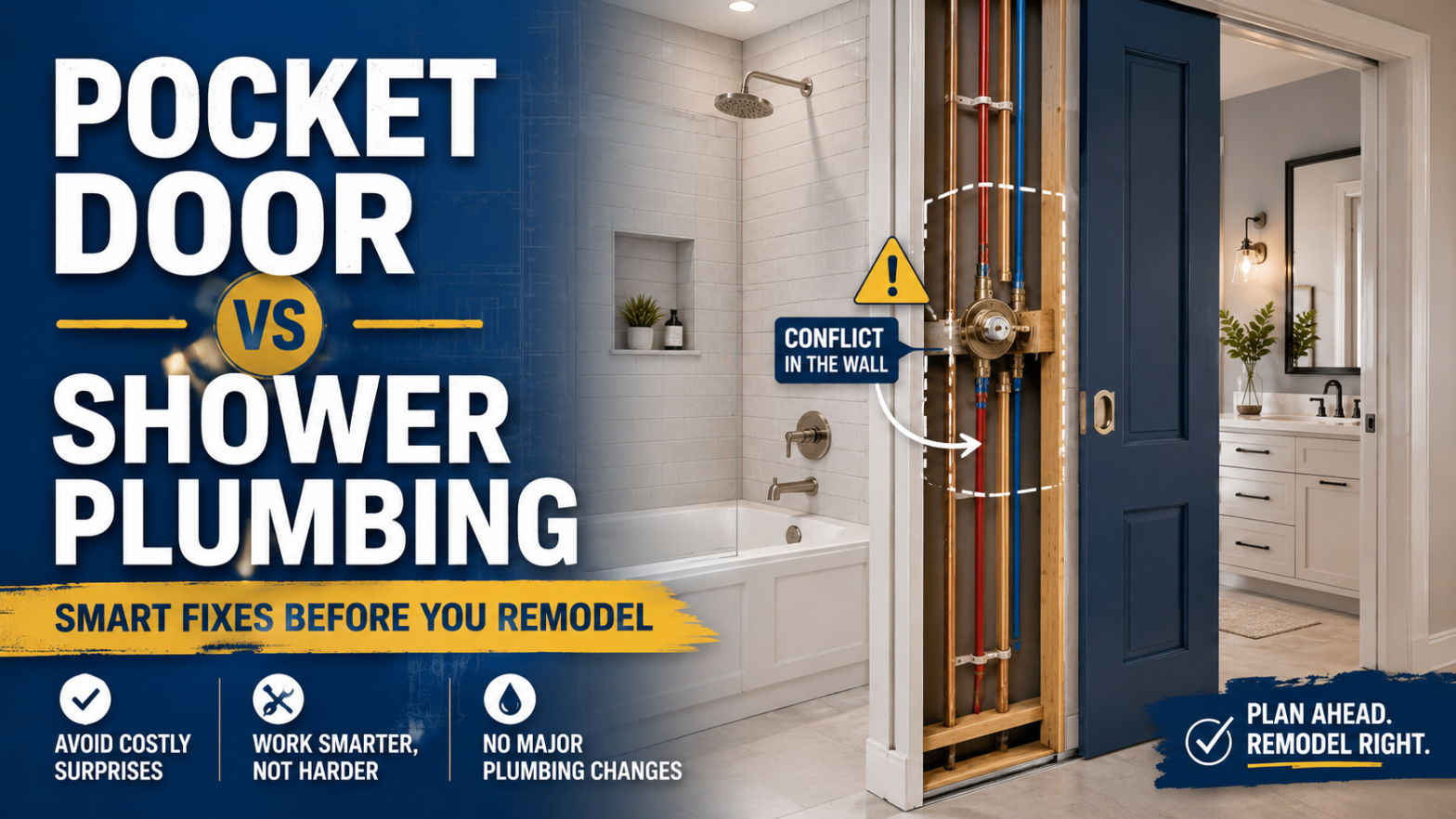
That pocket often takes the same space as water lines.
It can also hit the shower valve, tub spout line, and shower riser.
That makes this job more than a trim update.
Still, you may not need to move every pipe.
The best plan depends on wall layout, access, and local code.
Question
I want to remodel my tub and shower.
I also want a pocket door for the bathroom.
The door pocket would slide into the wall with my water supply lines.
The drain is not a problem.
The supply lines and shower controls are the problem.
Can I move the controls to the back wall?
Is there a flat control panel for a pocket door wall?
Should I reverse the tub and shower layout?
Answer
The safest answer is to keep all plumbing out of the pocket door wall.
A pocket door wall is not a normal wall cavity.
The door slab must slide inside that space.
That leaves little room for pipes, fittings, valves, or backing.
Even small pipes can rub, freeze, leak, or block the door.
The shower valve also needs solid support.
It needs space for service and future repair.
Most shower valves are not made for a sliding door pocket.
Best Remodel Options
1. Move the valve to another wall
This is often the cleanest choice.
The back wall may work well.
It must have enough depth for the valve body.
It also needs room for the shower riser.
A plumber can run new hot and cold lines there.
2. Use the opposite end of the tub
Reversing the tub and shower can work.
This may require more plumbing work.
The drain location may also need review.
It is not always the cheapest fix.
But it can give the pocket door a clear wall.
3. Use a different door style
A barn door avoids the wall pocket.
A swing door may also be easier.
A bifold door can save space, too.
These options may avoid moving the shower plumbing.
4. Build a thicker plumbing wall
You may add a chase beside the pocket frame.
This creates a space for pipes.
It can protect the door pocket.
It may reduce bathroom space slightly.
What I Would Avoid
I would not place a shower valve inside the pocket cavity.
I would not rely on a thin access panel there.
I would not let pipes share the door track space.
That can cause noise, wear, and repair trouble.
Check Code Before You Start
Plumbing rules vary by city and state.
Check your local permit office before rough-in.
You can also review model code resources from ICC Digital Codes.
Another useful source is the Uniform Plumbing Code from IAPMO.
Final Takeaway
The pocket door is possible.
But the plumbing must move first.
The best option is usually a new valve wall.
A licensed plumber should inspect the framing before work starts.
That step can save money and prevent leaks later.
I’m Chris Mayer, writing for Plumbing 101.