Small Farm Irrigation Pipe Hookups Made Simple
Small farms often need smart water systems.
Large irrigation companies may focus on big farms.
That can leave small landowners searching for clear answers.
This is common when building a water pipeline for pasture irrigation.
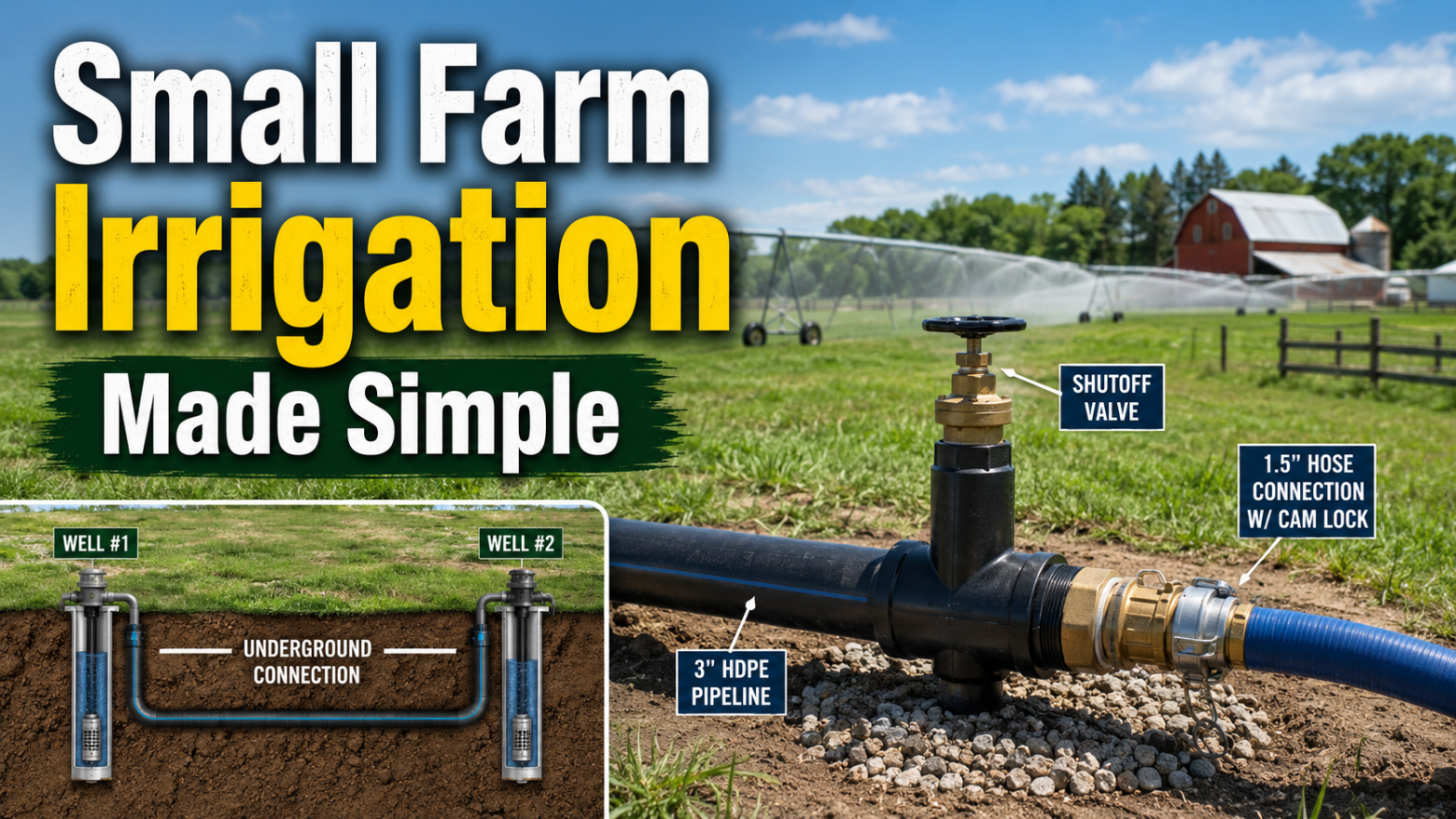
One common setup joins water from two wells.
The wells may sit far apart.
In this case, the distance is about 2,000 feet.
The goal is to move water through a 3-inch HDPE pipe.
That pipe can feed a low-pressure traveling irrigator.
The hard part is often not the main pipe.
The hard part is the connection points.
These points let the irrigator connect at different field locations.
A 1.5-inch flexible hose may connect with cam lock fittings.
Cam locks are fast and simple to use.
They also work well for hose changes in the field.
Question
What should I consider when adding connection points to a farm water pipeline?
Answer
Use properly sized risers, valves, pressure-rated fittings, and secure cam lock connections at each hookup point.
Each connection should have a shutoff valve.
This helps control water before removing the hose.
A valve also helps during repairs.
Each riser should be protected from farm equipment.
Use posts, markers, or a small guard around it.
The riser should also drain well.
Standing water can cause freeze damage in cold areas.
Use parts rated for the system pressure.
Low-pressure systems still need safe fittings.
Water hammer can damage weak parts.
Ask your pipe fusion supplier about compatible saddles and tees.
Also ask about HDPE-to-thread adapters.
Good planning helps avoid leaks later.
Helpful Places To Learn More
The USDA NRCS has useful farm water resources.
The Irrigation Association also shares irrigation guidance.
The Plastic Pipe Institute has HDPE pipe information.
Small Farm Tip
Draw the full pipe route before digging.
Mark every planned hookup point.
Then check the flow and pressure needs.
A plumber, well contractor, or irrigation designer can help.
This is important when two wells feed one line.
Backflow protection may also be needed.
Local rules can vary by county or state.
For a 40-acre pasture, simple can still work well.
The key is a safe pipe, strong fittings, and easy access.
I’m Chris Mayer, writing for Plumbing 101.