Adding a new bathroom is a big plumbing project.
It is also a great time to plan things right.
A clean layout can save work later.
It can also prevent slow drains and vent issues.
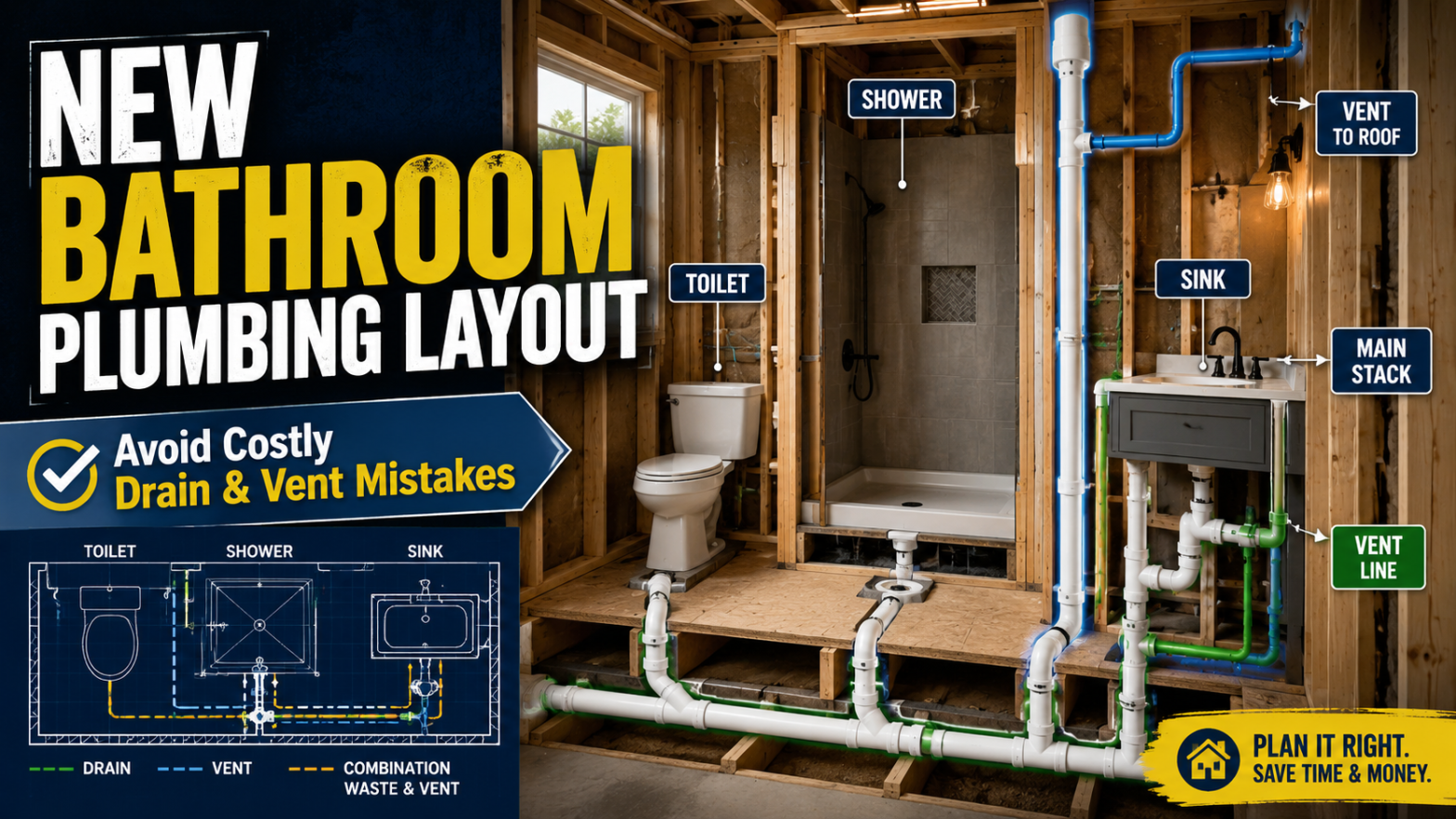
This project has a 3-inch drain stack near the new bathroom.
The stack will run through a closet area.
It will later be boxed in.
That is often a smart place for vertical plumbing.
The plan includes a toilet, shower, and sink.
The toilet would use a 3-inch drain.
The shower would likely use a 2-inch drain.
The sink would use a smaller drain and vent.
The room below may need ceiling work.
That is normal with new bathroom drains.
Still, cutting or drilling joists should be limited.
Never weaken framing without checking the rules.
You can review model plumbing code information at ICC.
You can also review plumbing code resources from IAPMO.
Question
I am adding a new bathroom.
I need help with the drain and vent layout.
Can I connect the toilet, shower, and sink to the stack?
Where should the sink and shower vent connect?
Answer
Yes, there are red flags to check.
Do not treat the stack like a place for random wyes.
Plan the toilet, shower, and sink as one vented bathroom group.
The sink vent may be the key to making the layout work.
The toilet should connect with a proper drainage fitting.
Use long-sweep fittings where the drain changes direction.
Avoid using tight vent-style fittings for waste flow.
The shower must be vented before the drain runs too far.
The allowed distance depends on pipe size and local code.
Do not guess on this part.
The sink is often the easiest fixture to vent.
It may also help wet vent the bathroom group.
That must be allowed by your local code.
It must also be piped in the correct order.
In many layouts, the lavatory drain enters upstream of the toilet.
Its vent rises in the wall.
That vent can protect nearby fixtures when designed right.
Do not run a dry vent flat under the floor.
A vent should rise vertically first.
Horizontal vent runs are limited by code.
They usually must stay above the flood rim level.
Also, avoid too many 90-degree turns.
Each turn can slow the flow.
It can also make drain cleaning harder.
Cleanouts are important on new work.
If this were my project, I would draw the full DWV plan first.
I would show pipe sizes, slope, vents, and cleanouts.
Then I would ask the local inspector before cutting.
Your plan is not way off.
But the venting order matters a lot.
The safest improvement is a planned wet vent layout.
That usually works better than stacking random branches.
I’m Chris Mayer, writing for Plumbing 101.