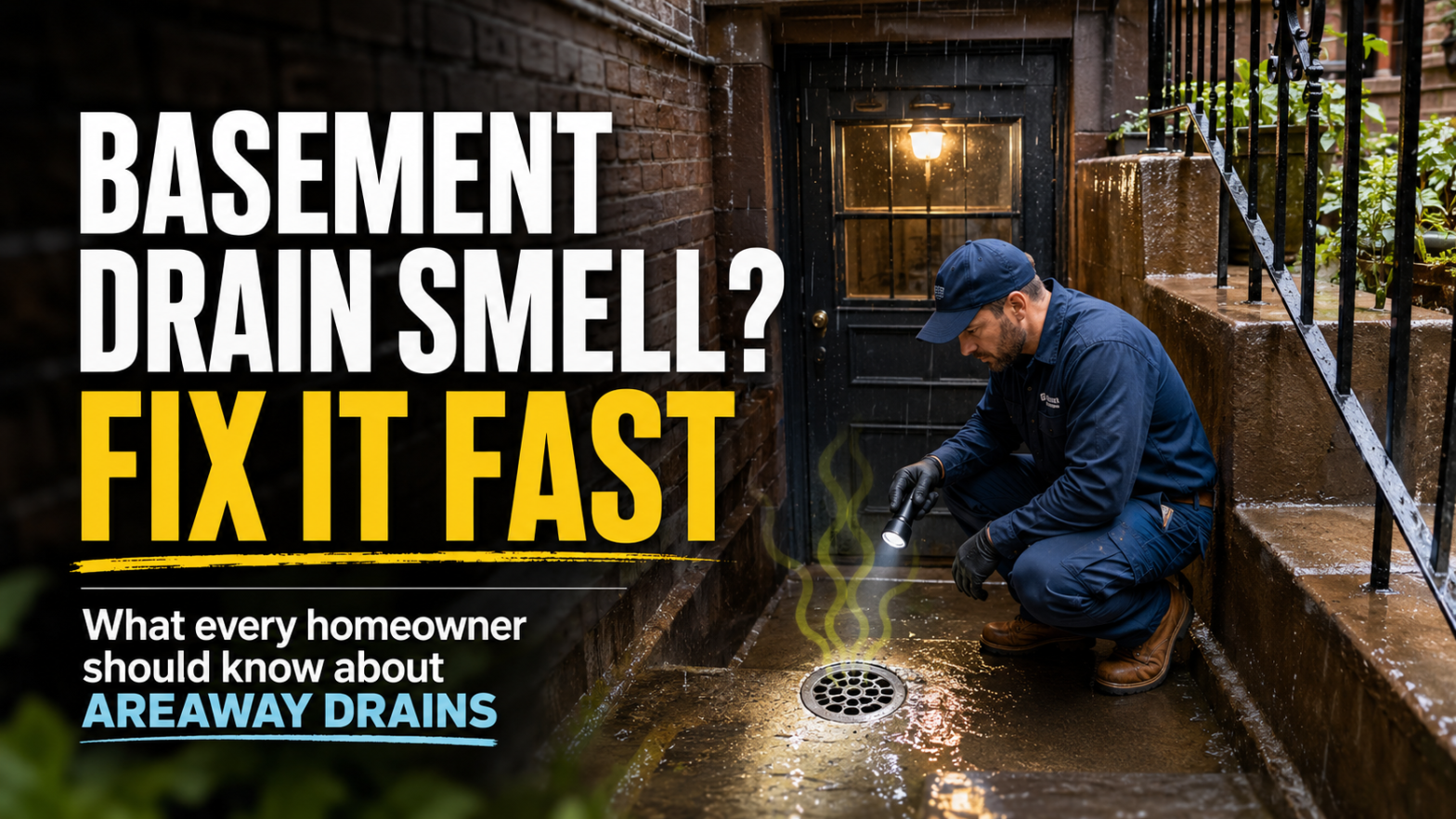
A smelly basement can start with one small floor drain.
In many Brooklyn rowhouses, an areaway sits outside the basement door.
This sunken space often has stairs leading down from the yard.
At the bottom, there may be a floor drain.
That drain helps move rainwater away during storms.
But it can also let sewer gas enter the home.
This often happens when the trap seal fails.
It can also happen when the drain is vented the wrong way.
A trap holds water to block sewer gas.
The EPA notes that traps help stop gas from entering homes through drains.
You can read more from the EPA sewer gas basement guide.
Why The Areaway Drain Smells
The vent is tied into the sewer line after the house trap.
That can allow foul air to move toward the areaway.
When the wind shifts, the smell may enter the basement.
A bad drain layout can make this worse.
A sanitary tee on its side is often a poor choice.
Bad pitch can also hold waste, mud, and odor.
Since the basement slab is being redone, this is the right time to fix it.
Should You Use A Deep Seal Trap?
A deep seal trap can help in some cases.
It holds more water than a standard trap.
That makes it harder for the trap to dry out.
But it does not replace proper venting in every case.
Plumbing vents protect trap seals from pressure changes.
The ICC explains that vents help limit pressure at trap seals.
See this ICC guide on plumbing vents.
Question
Can I install a deep seal areaway drain without a vent?
Answer
Maybe, but it should not be the first choice.
A licensed plumber should check the local code before the slab is poured.
The safer plan is a trapped drain with code-approved venting.
Trap seal protection is also smart for drains used only during storms.
New York City rules include floor drain vent sections.
You can review NYC Plumbing Code Section 910.2.
Best Fix During Slab Work
Replace the bad drain piping now.
Use the correct fittings for drainage flow.
Keep the pipe pitched toward the sewer.
Add a cleanout where it can be reached.
Use a trap that can be cleaned and serviced.
Ask about a trap primer or trap seal device.
This is helpful when the drain gets little water.
A covered areaway may not refill the trap often.
Heavy storms can still send water down the stairs.
So the drain must handle real flow when needed.
Do not bury a risky setup under fresh concrete.
Once the slab is poured, repairs become much harder.
The goal is simple.
Move stormwater away without letting sewer gas in.
That takes the right trap, pitch, venting, and seal protection.
I’m Chris Mayer, writing for Plumbing 101.