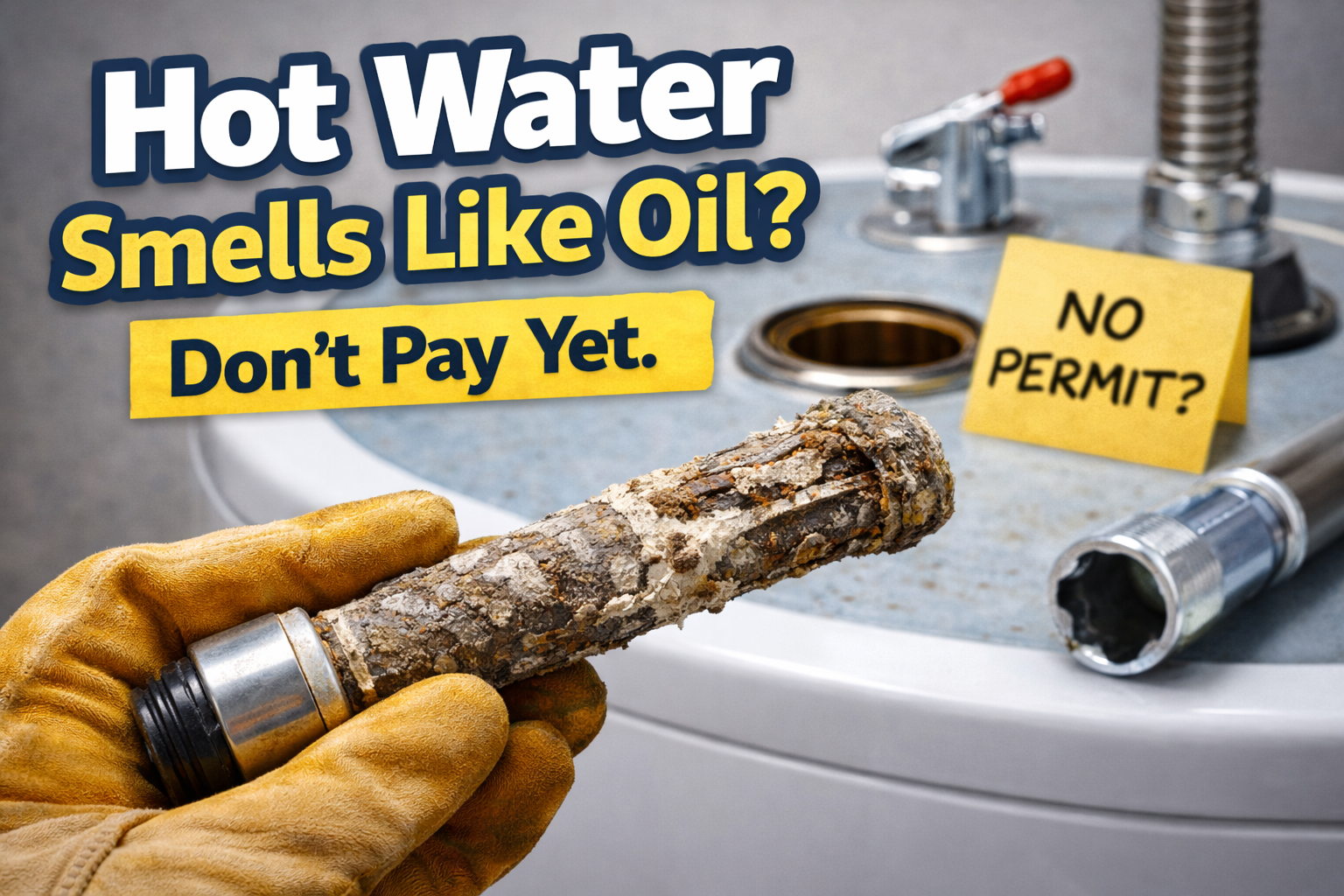
You paid for a brand-new Bradford White water heater. It was recommended by your plumber. Two workers installed it. The unit also needed a fuel conversion. It went from propane to natural gas.
Right after the install, the hot water smelled like oil. The smell is now faint. But it is still there. That can feel scary. You use that water every day.
You also learned that no permit was pulled. Your area requires one. That matters for safety. It also matters for inspection.
Is an “oily” smell normal?
A new heater can have short-term odors. Some come from new parts. Some come from manufacturing oils. But the smell should fade fast. A smell that lingers needs a real check.
What can cause an oil-like smell?
- Pipe dope or thread sealant is used on fittings.
- Cutting oil or grease on nipples and connectors.
- New rubber or plastic parts off-gassing.
- A wrong vent or burner setup is causing soot odors.
- An anode issue, but that is often a sulfur smell.
A sulfur smell is a “rotten egg” odor. Oil smell is different. Do not let anyone hand-wave it away.
What to do today
- Do not drink hot tap water. Use cold for cooking and drinks.
- Write down dates, smells, and what changed over time.
- Take photos of the heater, venting, gas line, and labels.
- Ask the plumber, in writing, for a permit and inspection.
- Ask for the model number and install manual to be followed.
Simple tests that can help
- Run only hot water at one faucet for two minutes.
- Smell the water in a clear glass after it cools.
- Remove and rinse faucet aerators and shower heads.
- Flush a few gallons from the tank drain into a bucket.
If the smell stays after flushing, stop guessing. Bring in a second licensed plumber. Ask for a written report.
Permit and payment reality
If a permit is required, the job is not “done” without it. An inspector can require fixes. That can protect you. It can also protect the next homeowner.
It is reasonable to hold payment until the install is verified. Keep everything polite and in writing.
Question and answer
Q: Should I replace the anode rod to fix an oil smell?
A: Not first. Persistent oil-like odor needs an install inspection and a flush. Replace the anode only after a clear diagnosis.
Helpful external resources
- U.S. DOE: Water heating basics.
- CDC: Drinking water basics and safety.
- NFPA: Gas safety codes and standards.
Final tip: Ask the plumber to confirm the conversion steps. Ask what orifice and settings were used. Ask them to show you the manual page.
I’m Chris Mayer, writing for Plumbing 101.