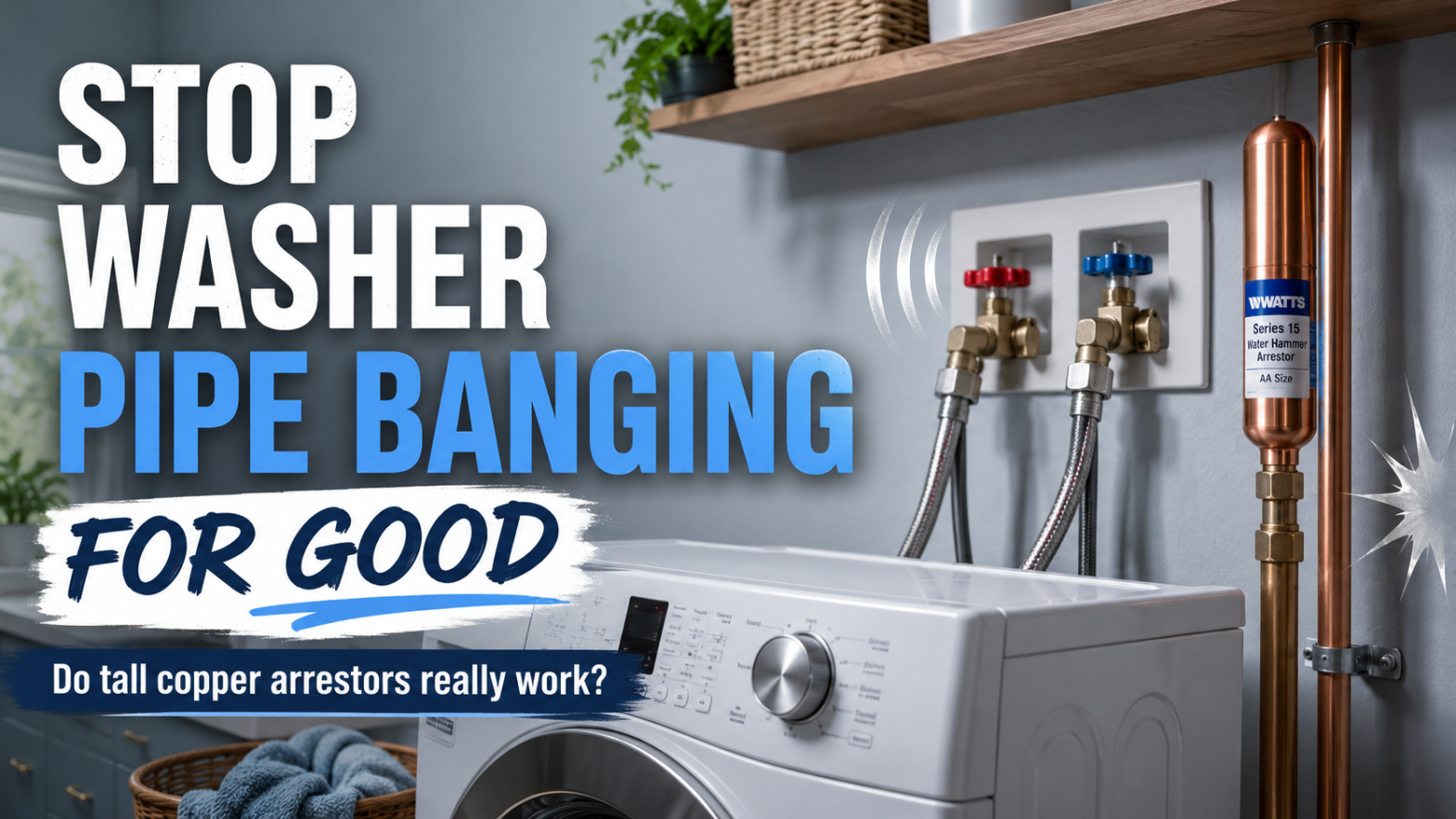
Washing machines can be rough on plumbing. Their fast shutoff valves stop water very quickly.
That sudden stop can cause water hammer. You may hear a bang, thump, or pipe shake.
A homeowner asked a common question. Cheap water hammer arrestors behind the washer lasted
about three years. Instead of buying new ones, they wanted to install old-style copper tube
arrestors.
Their plan was simple. Add tall copper tubes near the washer valves. Add a quarter-turn valve
and drain at the bottom. When the tubes fill with water, close the valves. Then drain the tubes.
After that, the air pocket would be restored.
Question
Is there any reason not to make those copper tubes three to four feet tall?
Answer
Yes. The main reason is that old-style air chambers can become waterlogged again.
Tall copper tubes may also fail code in some areas. A listed water hammer arrestor is usually
the better choice.
Old copper air chambers work by trapping air. That air cushions the moving water. Over time,
the air can dissolve into the water. Then the chamber fills with water. Once that happens,
it stops helping.
Making the tube taller may delay the problem. But it does not solve the main issue. The air
pocket can still disappear. A three-foot or four-foot tube may also be hard to hide. It can
add stress if it is not braced well.
Many modern plumbing systems use mechanical arrestors instead. These devices use a sealed
chamber, piston, or similar part. They are made to absorb shock from fast-closing valves.
Washing machines are a common place to use them.
Look for arrestors marked for the right standard and size. Oatey lists water hammer arrestors
for single fixtures and multi-fixture use. You can read more from Oatey.
Some product sheets also mention ASSE 1010 and PDI WH-201 standards.
Plumbing code can vary by state and city. The International Code Council explains plumbing
code rules and model code updates. You can review their resources at the International Code Council.
For local work, check with your building office.
What I Would Do
I would not build four-foot homemade arrestors behind a washer. I would install quality,
listed water hammer arrestors at the washer valves. I would also check the water pressure.
High pressure can make water hammer worse.
If the first arrestors failed fast, buy a better grade this time. Also, make sure they are
installed close to the washer shutoff valves. Support loose pipes, too. Loose pipes can make
normal water movement sound much worse.
The old copper tube idea is clever. But it is not the best long-term fix. A listed arrestor
It is cleaner, safer, smaller, and easier to service.
I’m Chris Mayer, writing for Plumbing 101.