Can You Cap an Abandoned Shower Drain?
An abandoned shower drain can seem simple to close.
You may see a 2-inch PVC standpipe and think a cap will fix it.
In many cases, a glued PVC cap can stop odors and pests.
But the best repair depends on where the cap is placed.
A shower drain normally has a P-trap below the floor.
That trap holds water and blocks sewer gas.
When the shower is abandoned, the trap can dry out.
Once dry, it may let sewer gas enter the room.
The Wisconsin Department of Health Services says sewer gas may cause irritation and headaches.
The CDC also notes that hydrogen sulfide is linked to sewers.
Question
I have an abandoned 2-inch PVC shower drain.
Can I glue a cap onto the standpipe?
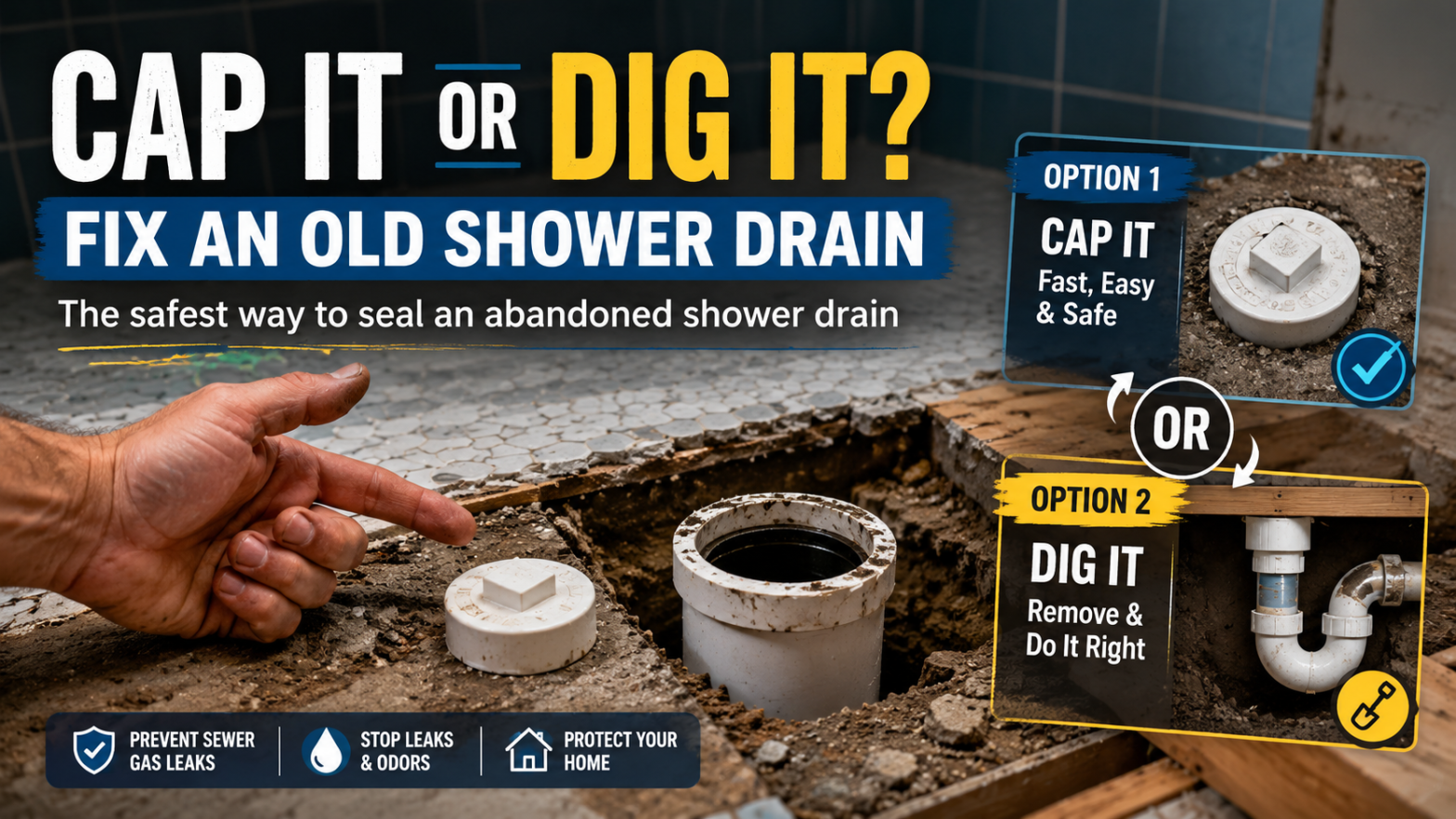
Or should I remove the P-trap and cap the drain line?
Removing the trap would mean digging.
There is also debris in the P-trap.
I vacuumed out what I could from the standpipe.
Answer
The better long-term fix is to remove the unused P-trap and cap the horizontal drain line.
A glued cap on the standpipe may work as a temporary seal.
But it leaves a dead, dirty trap below the floor.
That trap can hold debris, smell bad, or collect stagnant water.
If this drain will never be used again, cap the line before the trap.
This means cutting the drain line on the sewer side of the trap.
Then glue on a proper 2-inch PVC cap.
Use primer and PVC cement made for drain pipe.
Also, make sure the pipe is clean and dry.
A solid solvent-welded cap is usually more secure than a loose test plug.
Check local rules before closing any drain permanently.
The International Plumbing Code covers trap rules and trap seal protection.
If digging is hard, a glued cap on the standpipe can still seal the opening.
However, it should be easy to inspect later.
Do not bury a weak cap or rubber plug under concrete.
That can create a hidden leak point.
Best Practice
If the shower is gone for good, remove the trap.
Then cap the active drain line with a permanent PVC fitting.
If the drain may be reused later, cap the standpipe accessibly.
Label it so future owners know what it is.
Before sealing, remove as much debris as possible.
Debris left in a trap can rot and smell.
A wet-dry vacuum is a good first step.
A small drain brush may also help.
Never pour harsh chemicals into an abandoned trap.
They may sit there and damage the pipe.
Final Tip
When in doubt, choose the repair that removes the dead pipe.
Dead plumbing can hide odor, leaks, and future problems.
A clean, capped branch line is safer and neater.
It also makes future remodeling easier to understand.
I’m Chris Mayer, writing for Plumbing 101.