Shower Knob Turns Both Ways? Here’s Why
A strange shower handle can make any bathroom project feel unfinished.
One homeowner bought a townhouse about a year ago.
The upstairs shower worked fine, so the downstairs bathroom waited.
After a recent bathroom update, the downstairs tub and shower faucet acted odd.
At the top position, the water stayed off.
There was no leak, which is good news.
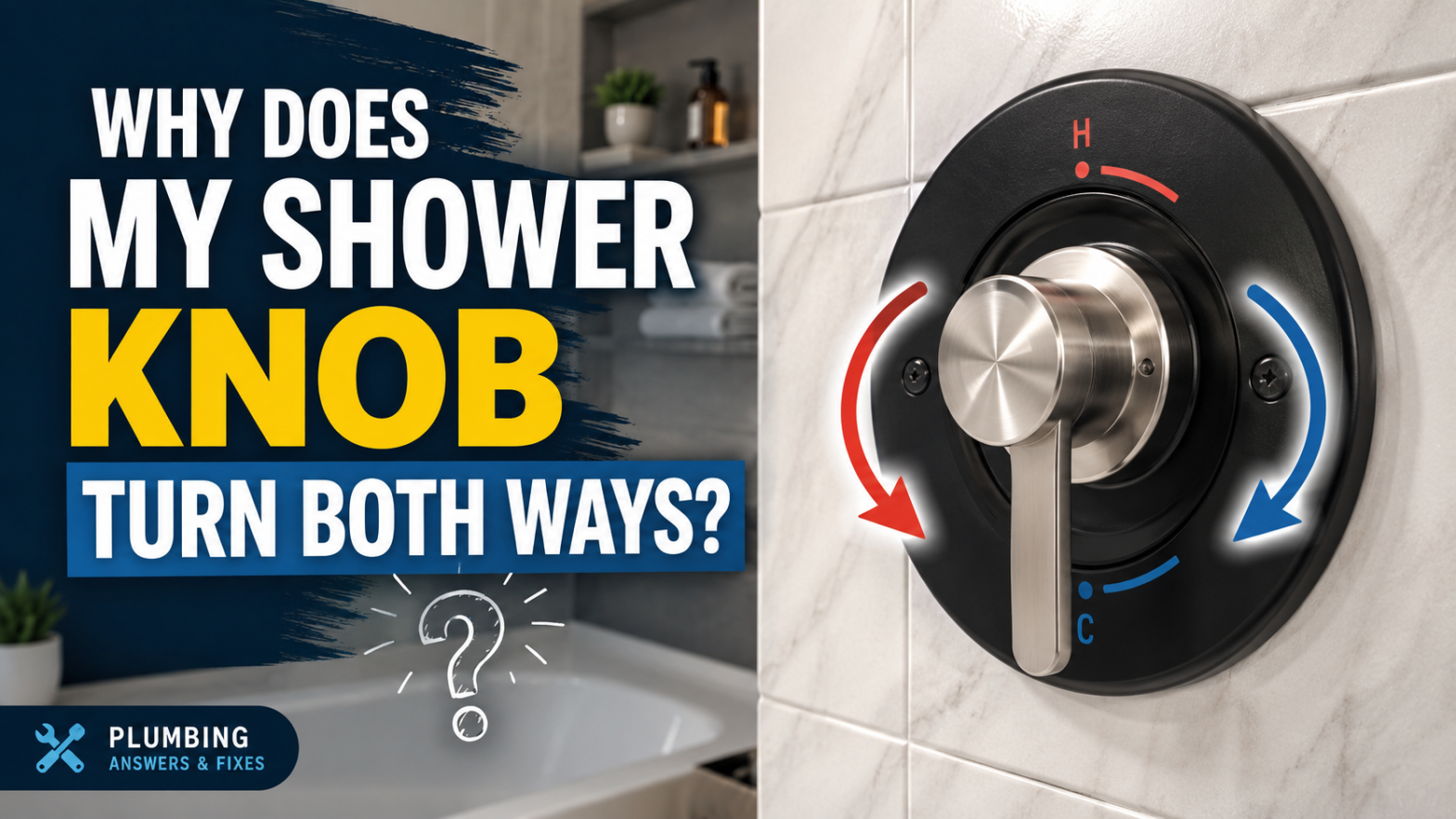
But the handle could turn both right and left.
In each direction, the water changed from cold to warm, then hot.
The faucet may be a Delta model, but that was not confirmed.
The homeowner only removed the handle and trim plate.
Then the trim plate was painted black and put back on.
The handle and stem had matching notches.
Those notches had to line up before the handle would fit.
So the handle seemed installed the right way.
Question
Is there a piece missing if a tub and shower knob turns both ways?
Answer
Yes, there may be a missing or misplaced stop piece. The handle may also be on the wrong valve trim setup.
Many single-handle tub and shower valves use a stop or limiter.
This part keeps the handle from turning too far.
If it is missing, broken, or installed incorrectly, the knob may rotate both ways.
That can make the faucet feel strange, even if the water still works.
Start by removing the handle again.
Look behind the handle for a plastic stop, a metal stop, or a limit ring.
Check if it is cracked, loose, or not seated properly.
You can compare the parts with Delta’s support guides at
Delta Faucet Service Parts.
If you find a model number, search it before buying parts.
Older Delta valves can look similar, but use different trim parts.
You should also check the cartridge orientation.
A rotated cartridge can cause odd temperature control.
Before opening the valve, shut off the water.
Use care when working behind finished tile or new trim.
For general plumbing safety, review basic water shutoff tips from The Home Depot.
If the stop is missing, a trim repair kit may fix it.
If the cartridge is damaged, replacement may be needed.
A plumber can also identify the valve body quickly.
That may save time and prevent buying the wrong parts.
The good news is simple.
This does not sound like a major plumbing failure.
It sounds more like a handle, stop, trim, or cartridge setup issue.
I’m Chris Mayer, writing for Plumbing 101.