A deeper kitchen sink can create a tight plumbing problem fast.
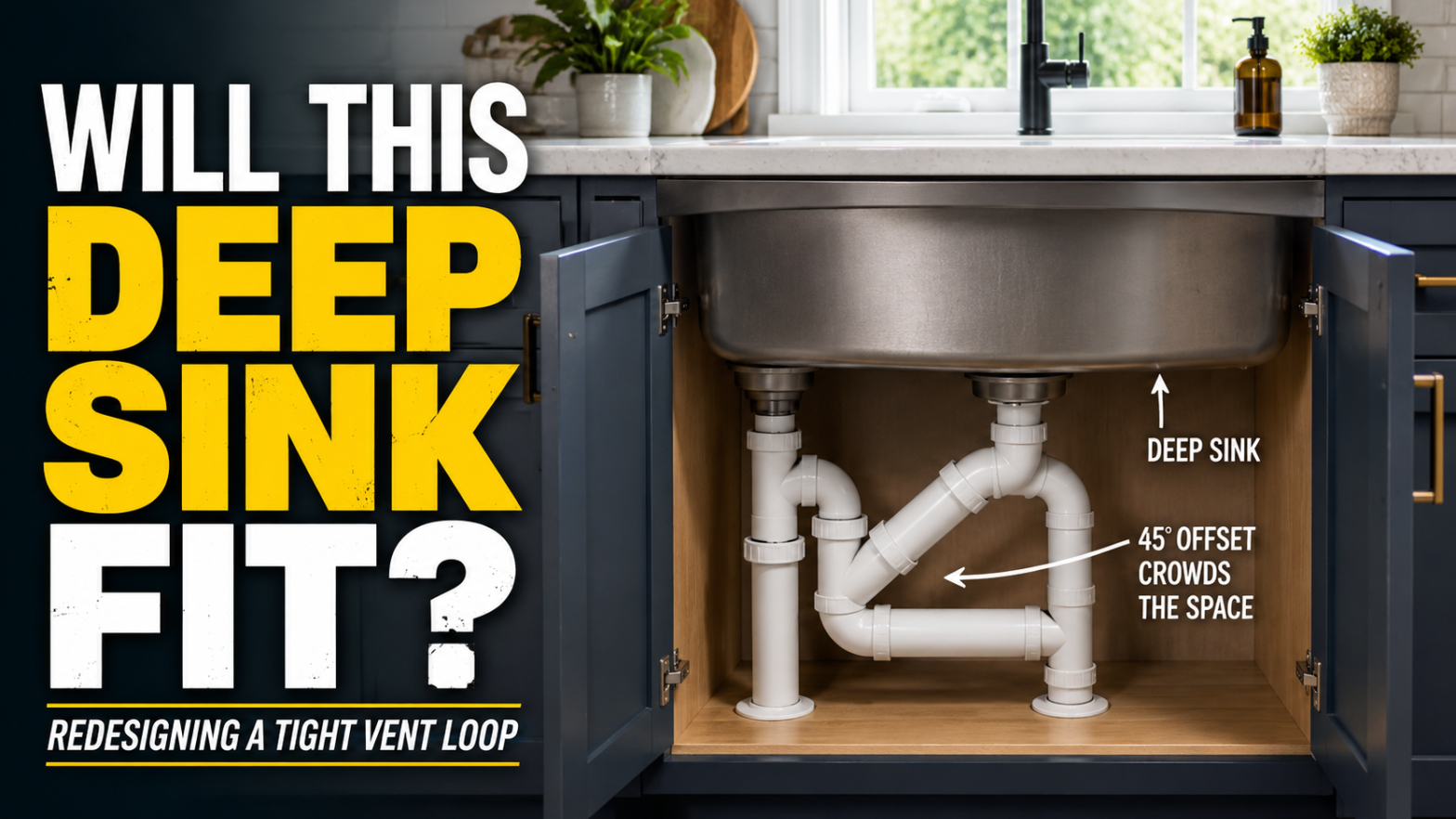
This is very true with a 30-inch by 19-inch by 9-inch undermount sink.
In a 33-inch cabinet, every inch matters.
The main issue is the 45-degree offset in the vent loop.
That offset may block the new sink bowl.
The pipes also cannot move farther back through the floor.
In the basement, the piping is already near the foundation wall.
That means the fix must happen inside the cabinet.
Question
Can this vent loop be remapped so a 9-inch-deep undermount sink will fit?
Answer
Yes, but the loop must stay code-friendly, properly sloped, and accessible. In Minnesota, do not replace the loop with an AAV.
Minnesota law says air admittance valves are not allowed in plumbing vent systems.
You can read the rule on the Minnesota Revisor website.
A safer plan is to rebuild the loop tighter against one cabinet wall.
Keep the top of the loop as high as possible under the sink deck.
Then drop the return vent back down beside the bowl.
Use long-turn drainage fittings where flow direction matters.
The Minnesota island vent guide also shows key layout rules.
It says vent piping below the floor needs drainage fittings.
It also shows the returned vent tying into the drain with a wye.
You can review that guide from the Minnesota Department of Labor and Industry.
Should Everything Stay 2 Inches?
In many homes, a kitchen sink trap arm is smaller than 2 inches.
But do not reduce pipe size without checking your local code.
The existing 2-inch loop may be there for a code reason.
It may also serve as part of the approved island vent layout.
Ask your local inspector before changing pipe size.
What About Couplings?
Shielded transition couplings are often better inside a cabinet.
They help keep pipes aligned and supported.
Plain rubber couplings can sag when not fully supported.
Use the right coupling for ABS-to-PVC if materials change.
Also, check whether your area allows that transition.
A Practical Cabinet Plan
Dry-fit the sink template first.
Mark the bowl, disposal, trap, and loop space.
Move the loop to the side with the most room.
Keep the trap easy to remove.
Leave space for shutoff valves and supplies.
Do not bury cleanouts or unions behind the sink bowl.
The goal is simple.
Keep the legal vent loop, but reshape it around the sink.
That usually means a taller, tighter side loop.
It may also mean hiring a licensed plumber.
This is smart when the foundation limits block pipe relocation.
I’m Chris Mayer, writing for Plumbing 101.