Replacing old shutoff valves is a smart plumbing update.
Many older homes still have multi-turn stop valves.
Those valves can get stiff, leak, or fail over time.
A quarter-turn ball valve is usually the better choice.
It opens and closes with one simple turn.
That makes it faster during a leak or repair.
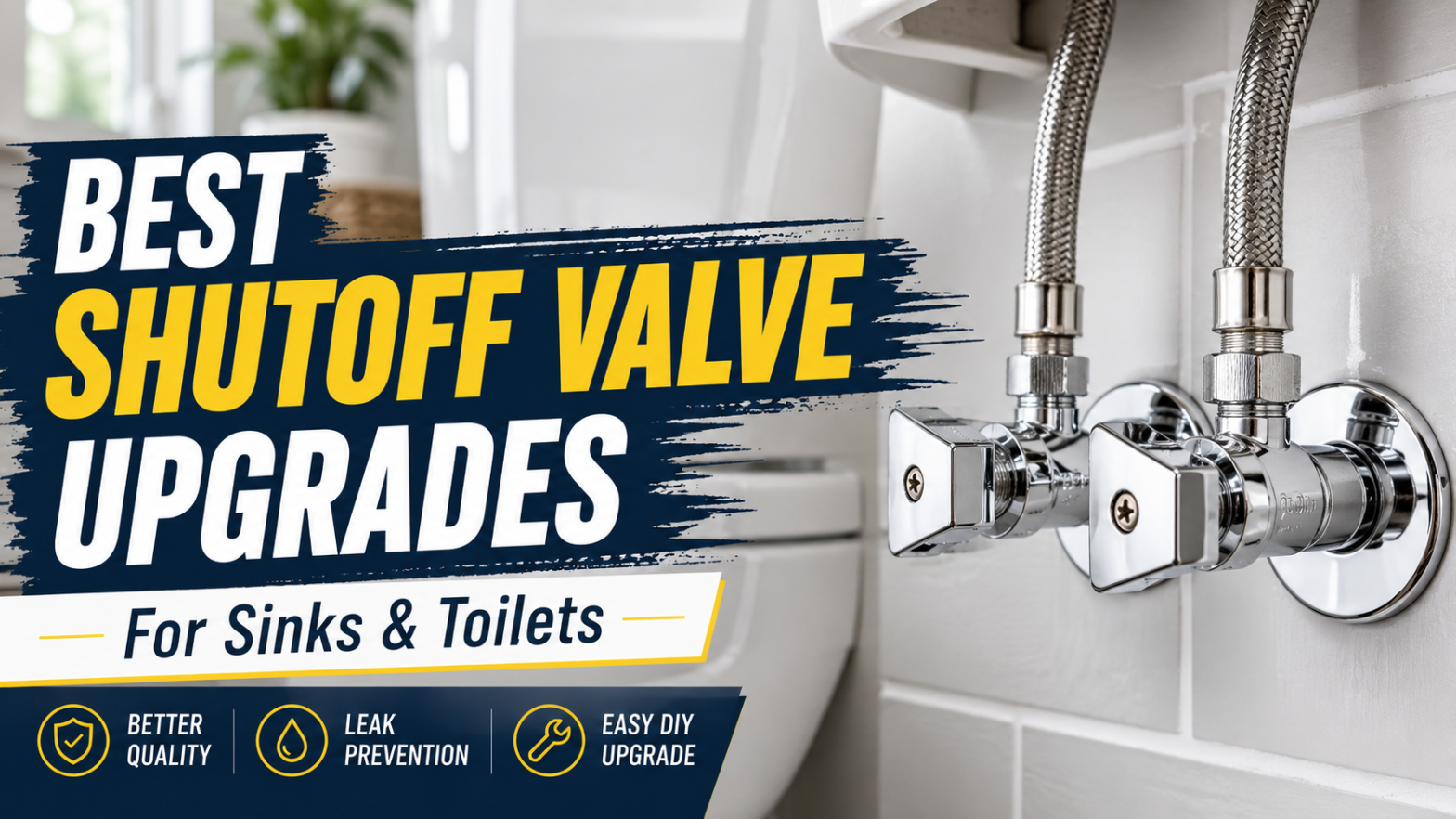
For sinks and toilets, choose quality angle stop valves.
Chrome-plated brass valves are a common best choice.
Brass is strong and handles normal home plumbing well.
The chrome finish also looks clean in bathrooms.
Plastic valves may cost less, but brass is usually better.
When replacing the valve, replace the escutcheon too.
The escutcheon is the trim plate on the wall.
It hides the pipe opening and gives a finished look.
Chrome-plated brass escutcheons are a good choice.
Plastic escutcheons can crack or discolor over time.
Also, check the supply lines during this job.
Old rigid tubes can be hard to reuse.
Flexible braided stainless steel supply lines are often easier.
They are simple to install and allow small adjustments.
Do not twist or kink flexible supply lines.
They should curve gently between the valve and fixture.
For toilets, a 12-inch supply line often works.
Some toilets may need a 9-inch or 16-inch line.
For bathroom sinks, 16-inch or 20-inch lines are common.
The best length depends on the valve location.
Measure before buying parts.
It is better to have a gentle loop than a tight pull.
Never stretch a supply line to make it fit.
For more plumbing safety tips, visit the EPA WaterSense leak guide.
You can also review plumbing standards through the International Code Council.
Question
What parts are best when replacing sink and toilet shutoff valves?
Answer
The best practice is to use quarter-turn chrome-plated brass shutoff valves, chrome-plated brass escutcheons, and braided stainless steel flexible supply lines. Measure each fixture before buying supply lines. Toilets often use 12-inch lines. Sinks often use 16-inch or 20-inch lines.
Best Parts Checklist
- Quarter-turn ball-style angle stop valves
- Chrome-plated brass valve bodies
- Chrome-plated brass escutcheons
- Braided stainless steel supply lines
- Correct compression or threaded sizes
- Gentle supply line bends with no kinks
Always match the new valve to the existing pipe type.
Copper, PEX, and CPVC may need different valve connections.
When unsure, bring photos to the hardware store.
You can also ask a licensed plumber before cutting the pipe.
Good parts cost more, but they save trouble later.
A clean shutoff valve can stop a small leak fast.
That makes this upgrade worth doing the right way.
I’m Chris Mayer, writing for Plumbing 101.