A new tankless water heater should not cause immediate concern.
But loud intake noise, high gas consumption, and fluctuating water temperature can occur after a poor setup.
One homeowner had a new A. O. Smith 95% efficient tankless water heater installed.
A licensed plumber did the work.
Right after the install, problems started.
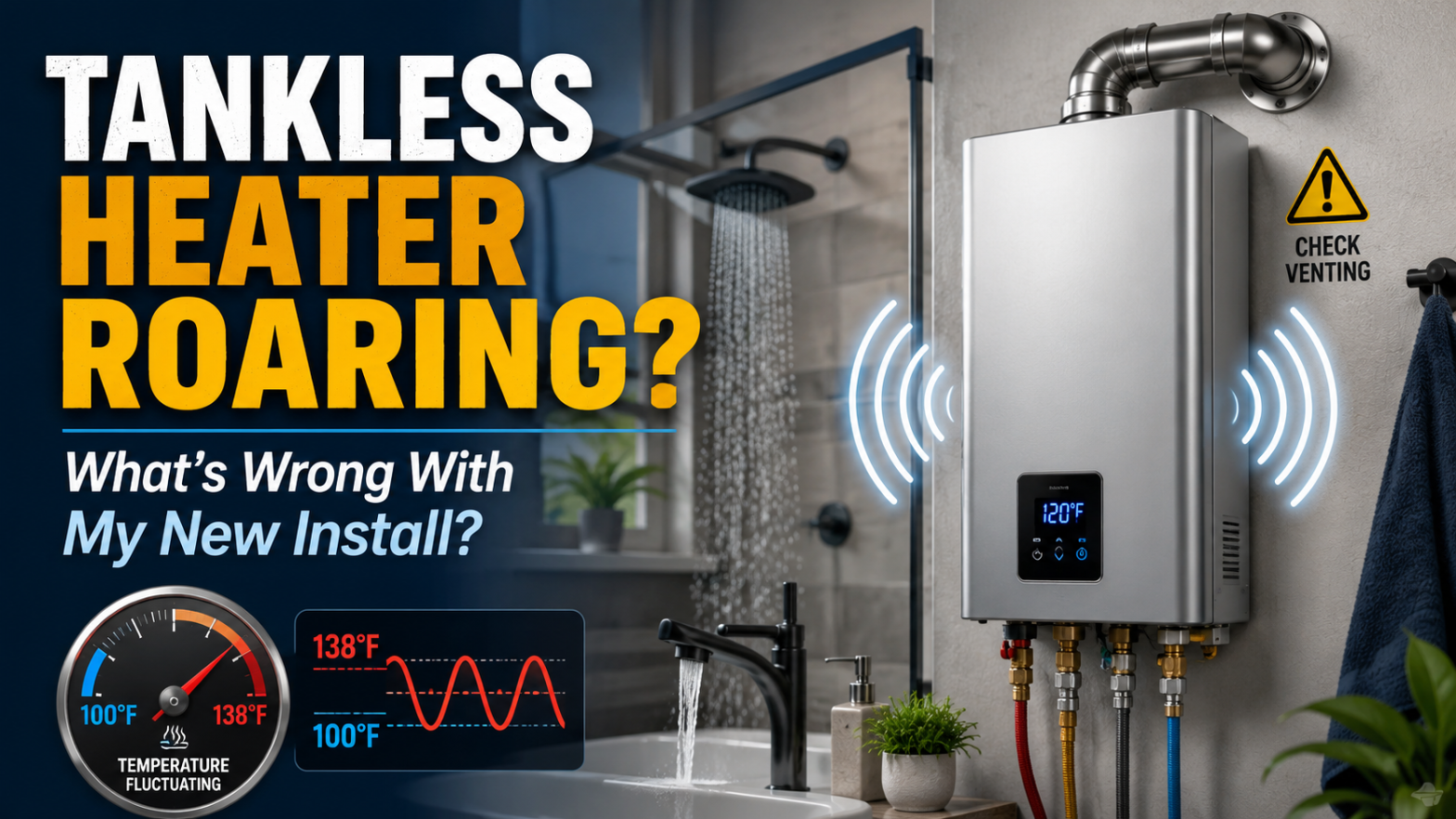
When a vanity faucet or shower was turned on, the unit became loud.
The intake sounded strong.
The gas burner also seemed to run very hard.
The owner compared it to pressing the gas pedal in a car.
The water temperature also moved up and down.
It jumped between about 100°F and 138°F.
That is not normal comfort for a shower.
It can also be unsafe.
Question
Did the installer install the tankless water heater incorrectly, or is the heater defective?
Answer
It could be either one, but the install should be checked first.
A tankless heater must have the right gas supply, venting, water flow, and setup.
If any part is wrong, the unit may run loudly.
It may also fail to hold a steady temperature.
A bad gas valve is possible.
A. O. Smith tech support may be right to suspect it.
Still, a new unit should not be blamed before checking the installation.
The plumber should confirm gas pipe size, gas pressure, vent length, vent slope, and clearances.
The plumber should also check the water flow rate at each fixture.
Low flow can make a tankless heater cycle poorly.
Dirty faucet aerators can also cause flow problems.
You can review A. O. Smith supports information at Hotwater.com support.
You can also contact A. O. Smith technical support through their official tech support page.
What About the 3-Inch Exhaust Vent?
The vent issue may be the bigger concern.
A tankless exhaust vent must follow the manufacturer’s manual.
It must also meet local code.
Moving the vent four feet up the exterior wall may be allowed.
But it depends on clearances.
The vent must stay away from windows, doors, air intakes, corners, and grade.
It must also be kept away from the AC condenser.
The AC unit needs clear air flow.
Hot exhaust should not blow into it.
That can hurt performance.
It may also cause corrosion over time.
Ask the plumber to show the exact vent clearance chart from the manual.
Also, ask for the local inspector to review the final vent location.
You can view general fuel gas code information through the International Fuel Gas Code.
What Should the Homeowner Do?
- Stop guessing and document each problem.
- Take photos of the vent, AC unit, and wall area.
- Record the water temperature swings.
- Ask the plumber for a written install checklist.
- Call A. O. Smith with the model and serial number.
- Ask the local inspector about the vent change.
Do not accept a vent move without code proof.
Also, do not accept loud operation as normal without testing.
A tankless water heater should be safe, steady, and properly vented.
I’m Chris Mayer, writing for Plumbing 101.