A new toilet should feel solid, clean, and safe.
But many homeowners get stuck on one final step.
Should the toilet base be caulked to the floor?
This question comes up often after a toilet install.
It is even more common on tile floors.
Porcelain tile can make caulk lines stand out.
A messy bead can ruin a nice bathroom look.
In this case, three Toto Drake toilets were installed.
They sit on porcelain tile over a concrete slab.
One toilet needed a few front shims.
All three toilets feel rock solid.
None of them wobbles.
Question
Do toilets have to be caulked at the base?
What is the best way to caulk them neatly?
How should the caulk tube tip be cut?
Answer
Yes, caulking is usually the best choice.
Many plumbing codes require sealed joints where fixtures meet floors.
A clean caulk bead also blocks mop water, urine, and dirt.
Leave a small gap at the back if local code allows it.
That gap can help reveal a wax ring leak early.
The Oatey toilet caulking guide explains the common debate.
Some plumbers worry that caulk can hide leaks.
Others prefer caulk for sanitation and code reasons.
GE Sealants also notes that the International Plumbing Code requires sealing around toilet bases.
Always check your local code first.
Local rules can be stricter than general guidance.
Why Caulk Around a Toilet?
Caulk is not meant to stop a bad wax ring.
A wax ring leak needs repair.
Caulk should never be used to hide that problem.
The main job of caulk is simple.
It keeps outside water from getting under the bowl.
That water can come from mopping or bath splashes.
It can also come from small bathroom accidents.
Caulk also helps the toilet look finished.
It covers small gaps under the china base.
It can also cover small shims.
That matters on a tile floor.
Best Caulk for a Toilet Base
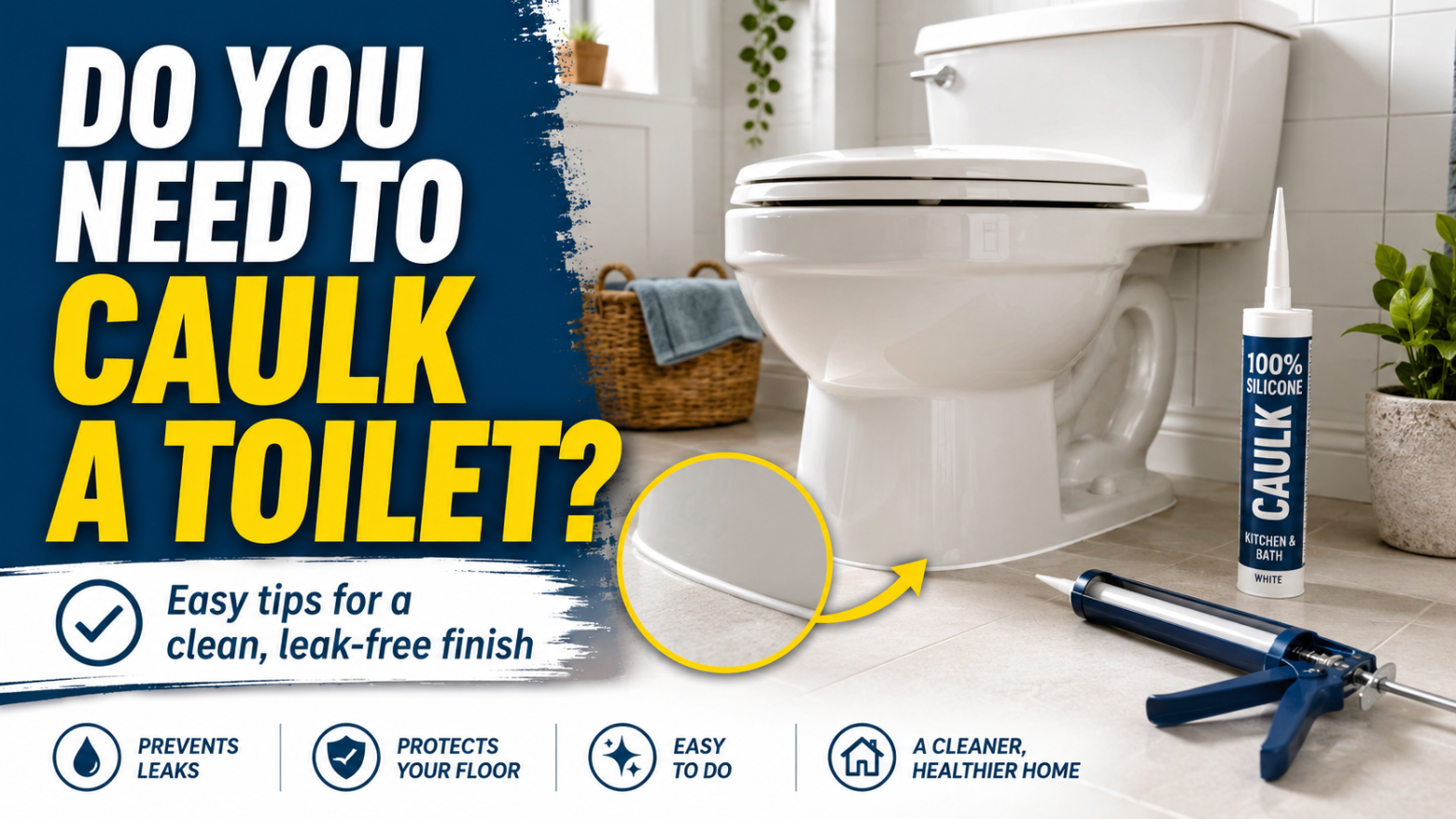
Use a high-quality kitchen and bath silicone caulk.
White silicone usually looks best on white toilets.
Clear caulk can show dirt over time.
Avoid cheap painter’s caulk for this job.
It may shrink or crack near bathroom moisture.
Silicone handles water much better.
How to Caulk It Cleanly
- Clean the floor and toilet base well.
- Let the area dry fully.
- Apply painter’s tape around the toilet base.
- Leave a small, even gap for caulk.
- Cut the tube tip very small.
- Start with a hole about 1/8 inch wide.
- Run a slow bead around the front and sides.
- Tool the bead with a wet finger or caulk tool.
- Pull the tape before the caulk skins over.
- Let the caulk cure before cleaning the floor.
Start with a smaller cut than you think.
You can always make the hole larger.
You cannot make it smaller later.
Hold the tube at a steady angle.
Move slowly and keep light pressure.
Do not try to fix every flaw with more caulk.
Too much caulk causes the ugliest beads.
Should You Leave the Back Open?
Many plumbers caulk the front and sides only.
They leave the back open as a leak tell.
If the wax ring fails, water may show there.
This is a practical method.
But it may not meet every local code.
Ask your local inspector if unsure.
For these Toto Drake toilets, the best plan is simple.
Since they are solid, do not reset them.
Caulk them neatly with a small silicone bead.
Cover the shims with caulk if possible.
Keep the bead thin and clean.
Removing bad caulk is no fun.
Good prep makes the second try much easier.
Tape, a small tube opening, and patience matter most.
I’m Chris Mayer, writing for Plumbing 101.